Skip to content
Save 5% on your next order with code PREMIUM5!
100,000+ Products for Home, Medical, Office & Classroom Needs
Search
Skip to product information
1 of 1

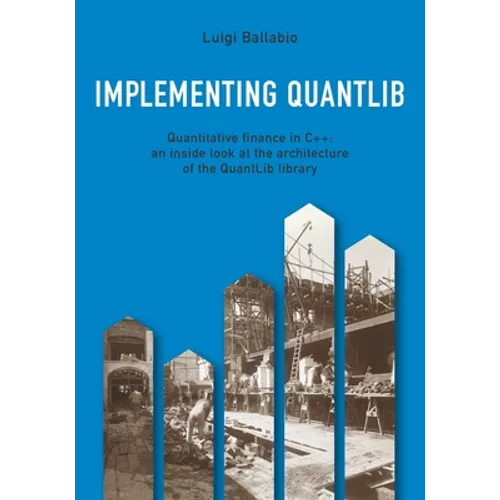
Implementing QuantLib: Quantitative finance in C++: an inside look at the architecture of the QuantLib library - Paperback

$53.98 USD
$53.98 USD
Sale Sold out
Shipping calculated at checkout.
In stock (100 units), ready to be shipped

Available Offers

Fast delivery available on most orders

Multiple secure payment options accepted

Secure checkout with
  • American Express
  • Apple Pay
  • Diners Club
  • Discover
  • Google Pay
  • Mastercard
  • PayPal
  • Shop Pay
  • Visa

Flight Range: Up to 1,000 meters (3,280 feet)

Maximum Speed: 45 kilometers per hour (28 miles per hour)

For all orders exceeding a value of 100USD shipping is offered for free.

Returns will be accepted for up to 10 days of Customer’s receipt or tracking number on unworn items. You, as a Customer, are obliged to inform us via email before you return the item.

Otherwise, standard shipping charges apply. Check out our delivery Terms & Conditions for more details.

View Product Details
Shopping cart
Product Product subtotal Quantity Price Product subtotal
Implementing QuantLib: Quantitative finance in C++: an inside look at the architecture of the QuantLib library - Paperback
$53.98/ea
$0.00
$53.98/ea $0.00

Product Description

by Luigi Ballabio (Author)

This book is a report on the design and implementation of QuantLib, alike in spirit-but, hopefully, with less frightening results-to the "How I did it" book prominently featured in Mel Brooks' Young Frankenstein (in this case, of course, it would be "how we did it"). If you are, or want to be, a QuantLib user, you will find here useful information on the design of the library that might not be readily apparent when reading the code. If you're working in quantitative finance, even if not using QuantLib, you can still read it as a field report on the design of a financial library. You will find that it covers issues that you might also face, as well as some possible solutions and their rationale. Based on your constraints, it is possible-even likely-that you will choose other solutions; but you might profit from this discussion just the same.The book is primarily aimed at users wanting to extend the library with their own instruments or models; if you desire to do so, the description of the available class hierarchies and frameworks will provide you with information about the hooks you need to integrate your code with QuantLib and take advantage of its facilities. If you're not this kind of user, don't give up on the book yet; you can find useful information too. However, you might want to look at the QuantLib Python Cookbook instead; it's available in all electronic formats from Leanpub.

Number of Pages: 364
Dimensions: 0.75 x 10 x 7 IN
Publication Date: October 04, 2020
you might like