Product Description
by Brent Cebul (Author)
Today, the word "neoliberal" is used to describe an epochal shift toward market-oriented governance begun in the 1970s. Yet the roots of many of neoliberalism's policy tools can be traced to the ideas and practices of mid-twentieth-century liberalism.
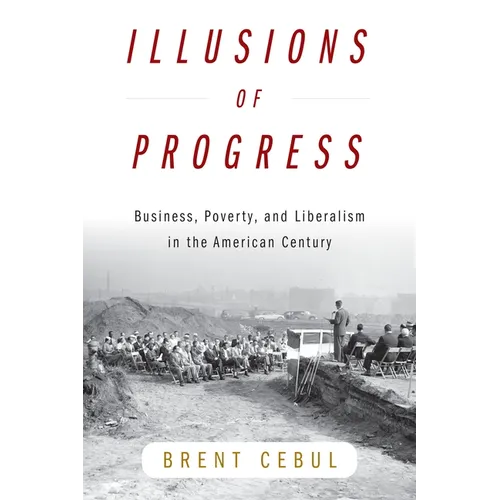
In Illusions of Progress, Brent Cebul chronicles the rise of what he terms "supply-side liberalism," a powerful and enduring orientation toward politics and the economy, race and poverty, that united local chambers of commerce, liberal policymakers and economists, and urban and rural economic planners. Beginning in the late 1930s, New Dealers tied expansive aspirations for social and, later, racial progress to a variety of economic development initiatives. In communities across the country, otherwise conservative business elites administered liberal public works, urban redevelopment, and housing programs. But by binding national visions of progress to the local interests of capital, liberals often entrenched the very inequalities of power and opportunity they imagined their programs solving. When President Lyndon Johnson launched the War on Poverty--which prioritized direct partnerships with poor and racially marginalized citizens--businesspeople, Republicans, and soon, a rising generation of New Democrats sought to rein in its seeming excesses by reinventing and redeploying many of the policy tools and commitments pioneered on liberalism's supply side: public-private partnerships, market-oriented solutions, fiscal "realism," and, above all, subsidies for business-led growth now promised to blunt, and perhaps ultimately replace, programs for poor and marginalized Americans. In this wide-ranging book, Brent Cebul illuminates the often-overlooked structures of governance, markets, and public debt through which America's warring political ideologies have been expressed and transformed. From Washington, D.C. to the declining Rustbelt and emerging Sunbelt and back again, Illusions of Progress reveals the centrality of public and private forms of profit that have defined the enduring boundaries of American politics, opportunity, and inequality-- in an era of liberal ascendance and an age of neoliberal retrenchment.Author Biography
Brent Cebul is Associate Professor of History at the University of Pennsylvania.
Number of Pages: 480
Dimensions: 1.07 x 9 x 6 IN
Publication Date: March 31, 2026