Skip to content
Save 5% on your next order with code PREMIUM5!
100,000+ Products for Home, Medical, Office & Classroom Needs
Search
Skip to product information
1 of 1

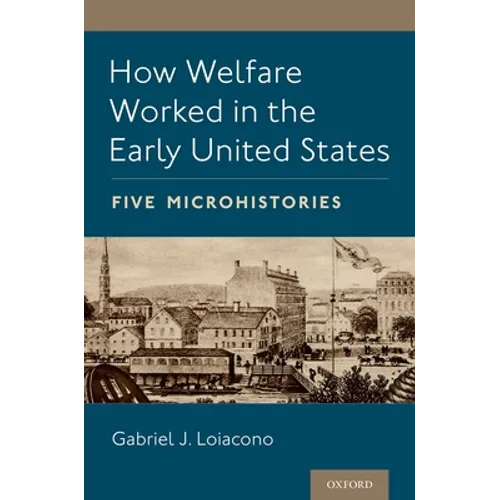
How Welfare Worked in the Early United States: Five Microhistories - Paperback

$78.64 USD
$78.64 USD
Sale Sold out
Shipping calculated at checkout.

Available Offers

Fast delivery available on most orders

Multiple secure payment options accepted

Secure checkout with
  • American Express
  • Apple Pay
  • Diners Club
  • Discover
  • Google Pay
  • Mastercard
  • PayPal
  • Shop Pay
  • Visa

Flight Range: Up to 1,000 meters (3,280 feet)

Maximum Speed: 45 kilometers per hour (28 miles per hour)

For all orders exceeding a value of 100USD shipping is offered for free.

Returns will be accepted for up to 10 days of Customer’s receipt or tracking number on unworn items. You, as a Customer, are obliged to inform us via email before you return the item.

Otherwise, standard shipping charges apply. Check out our delivery Terms & Conditions for more details.

View Product Details
Shopping cart
Product Product subtotal Quantity Price Product subtotal
How Welfare Worked in the Early United States: Five Microhistories - Paperback
$78.64/ea
$0.00
Sold out
$78.64/ea $0.00

Product Description

by Gabriel J. Loiacono (Author)

What was American welfare like in George Washington's day? It was expensive, extensive, and run by local governments. Known as "poor relief," it included what we would now call welfare and social work. Unlike other aspects of government, poor relief remained consistent in structure between the establishment of the British colonies in the 1600s and the New Deal of the 1930s. In this book, Gabriel J. Loiacono follows the lives of five people in Rhode Island between the Revolutionary War and 1850: a long-serving overseer of the poor, a Continental Army veteran who was repeatedly banished from town, a nurse who was paid by the government to care for the poor, an unwed mother who cared for the elderly, and a paralyzed young man who attempted to become a Christian missionary from inside of a poorhouse. Of Native, African, and English descent, these five Rhode Islanders utilized poor relief in various ways. Tracing their involvement with these programs, Loiacono explains the importance
of welfare through the first few generations of United States history.

In Washington's day, poor relief was both generous and controlling. Two centuries ago, Americans paid for--and many relied on--an astonishing governmental system that provided food, housing, and medical care to those in need. This poor relief system also shaped American households and dictated where Americans could live and work. Recent generations have assumed that welfare is a new development in the United States. This book shows how old welfare is in the United States of America through five little-known, but compelling, life stories.

Author Biography


Gabriel J. Loiacono is Associate Professor of History at the University of Wisconsin Oshkosh. He has spent much of the past two decades studying the ways early Americans responded to poverty. Loiacono has published articles in The Atlantic, Rhode Island History, New England Quarterly, and Journal of
Policy History.


Number of Pages: 246
Dimensions: 0.7 x 9.1 x 6.1 IN
Illustrated: Yes
Publication Date: April 29, 2021
you might like