Skip to content
Save 5% on your next order with code PREMIUM5!
100,000+ Products for Home, Medical, Office & Classroom Needs
Search
Skip to product information
1 of 1

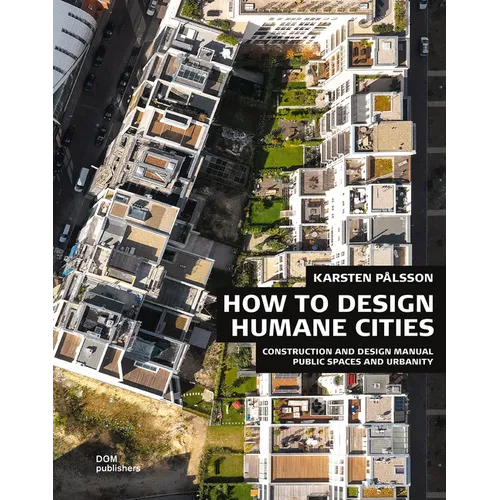
How to Design Humane Cities: Public Spaces and Urbanity - Hardcover

$107.91 USD
$107.91 USD
Sale Sold out
Shipping calculated at checkout.

Available Offers

Fast delivery available on most orders

Multiple secure payment options accepted

Secure checkout with
  • American Express
  • Apple Pay
  • Diners Club
  • Discover
  • Google Pay
  • Mastercard
  • PayPal
  • Shop Pay
  • Visa

Flight Range: Up to 1,000 meters (3,280 feet)

Maximum Speed: 45 kilometers per hour (28 miles per hour)

For all orders exceeding a value of 100USD shipping is offered for free.

Returns will be accepted for up to 10 days of Customer’s receipt or tracking number on unworn items. You, as a Customer, are obliged to inform us via email before you return the item.

Otherwise, standard shipping charges apply. Check out our delivery Terms & Conditions for more details.

View Product Details
Shopping cart
Product Product subtotal Quantity Price Product subtotal
How to Design Humane Cities: Public Spaces and Urbanity - Hardcover
$107.91/ea
$0.00
Sold out
$107.91/ea $0.00

Product Description

by Karsten P虱sson (Author)

This book is about renewing the city with room for people, about historical over-lay and respect for the building tradi-tions of the past, and about new archi-tecture on a human scale.

The book takes its departure in the European tradition of the dense classic city. Focus is on phys-ical and spatial relationships, develop-ment patterns, access principles, and their connection to public streets and squares: the elements that make for a rich urban life. Rooted in European traditions, this book is envisioned as a profession-al "instruction manual" that offers ex-amples of a more humane direction for urban conversion. The examples in the book come from major European cities and are set in a broad conceptual frame-work. A historical outline reviews urban development over time. The chapters are organized into tool--oriented themes that help urban planners and architects put the concepts into practice and relate them to their respective challenges.


Number of Pages: 272
Illustrated: Yes
Publication Date: January 16, 2024
you might like
