Product Description
by Michael E. O'Hanlon (Author)
"
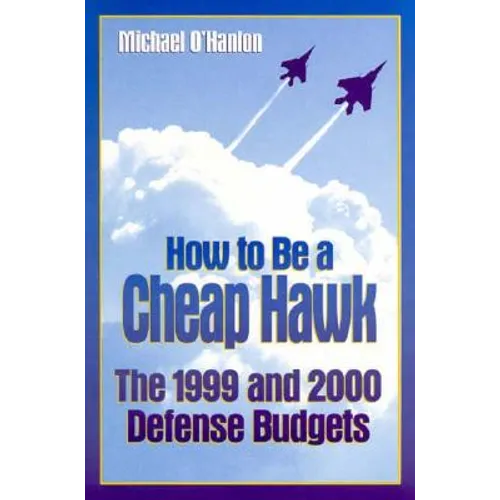
Two important events in 1997--the balanced-budget deal and the completion of the Pentagon's Quadrennial Defense Review (QDR)--promise to shape U.S. military policy for the next several years. Unfortunately, they are at odds with each other. The balanced budget accord will result in a real level of defense spending that is 8 percent lower in 2002 than in 1998. But the proportionate cuts in personnel and weaponry that the QDR calls for are only about half that size. Moreover, the U.S. military is near the end of its so-called ""procurement holiday"" and will soon have to buy more equipment. In this study, Michael O'Hanlon suggests a way out of this budgetary fix. In contrast to the current U.S. military posture, built around a requirement to fight two Desert-Storm like wars at once, he offers an alternative force structure organized around the concept of a ""Desert Storm plus Desert Shield plus Bosnia/IFOR"" requirement. O'Hanlon also suggests that naval operations be conducted more efficiently by leaving ships on forward station for longer periods of time and rotating crews by airlift. Finally, he argues for a number of selected economies in weapons modernization programs, together with some increases in areas like strategic airlift, sealift, and transport helicopters. The resulting force would save over $10 billion a year.
"Author Biography
Michael E. O'Hanlon is a senior fellow in Foreign Policy Studies at the Brookings Institution, where he holds the Sydney Stein Jr. Chair. His recent books include The Future of Arms Control (Brookings, 2005; with Michael A. Levi), Neither Star Wars nor Sanctuary (Brookings, 2004), and Crisis on the Korean Peninsula (McGraw Hill, 2003; with Mike Mochizuki).