Skip to content
Welcome To Our Store.
100,000+ Products for Home, Medical, Office & Classroom Needs
Search
Skip to product information
1 of 1

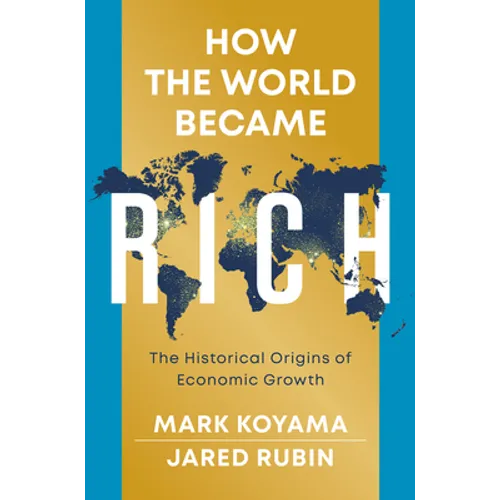
How the World Became Rich: The Historical Origins of Economic Growth - Hardcover

$119.61 USD
$119.61 USD
Sale Sold out
Shipping calculated at checkout.
In stock (100 units), ready to be shipped

Available Offers

Fastest Delivery Tomorrow With Vip DealOrder within 1 hr 8 mins.

Instant 10% Discount On HDFC Banks Credit/Debit Cards EMI and CreditCard

Secure checkout with
  • American Express
  • Apple Pay
  • Diners Club
  • Discover
  • Google Pay
  • Mastercard
  • PayPal
  • Shop Pay
  • Visa

Flight Range: Up to 1,000 meters (3,280 feet)

Maximum Speed: 45 kilometers per hour (28 miles per hour)

For all orders exceeding a value of 100USD shipping is offered for free.

Returns will be accepted for up to 10 days of Customer’s receipt or tracking number on unworn items. You, as a Customer, are obliged to inform us via email before you return the item.

Otherwise, standard shipping charges apply. Check out our delivery Terms & Conditions for more details.

View Product Details
Shopping cart
Product Product subtotal Quantity Price Product subtotal
How the World Became Rich: The Historical Origins of Economic Growth - Hardcover
$119.61/ea
$0.00
$119.61/ea $0.00

Product Description

by Mark Koyama (Author), Jared Rubin (Author)

Most humans are significantly richer than their ancestors. Humanity gained nearly all of its wealth in the last two centuries. How did this come to pass? How did the world become rich?

Mark Koyama and Jared Rubin dive into the many theories of why modern economic growth happened when and where it did. They discuss recently advanced theories rooted in geography, politics, culture, demography, and colonialism. Pieces of each of these theories help explain key events on the path to modern riches. Why did the Industrial Revolution begin in 18th-century Britain? Why did some European countries, the US, and Japan catch up in the 19th century? Why did it take until the late 20th and 21st centuries for other countries? Why have some still not caught up?

Koyama and Rubin show that the past can provide a guide for how countries can escape poverty. There are certain prerequisites that all successful economies seem to have. But there is also no panacea. A society's past and its institutions and culture play a key role in shaping how it may - or may not - develop.

Author Biography

Mark Koyama is Associate Professor of Economics at George Mason University.
Jared Rubin is Professor of Economics at Chapman University.


Number of Pages: 240
Dimensions: 0.63 x 9 x 6 IN
Illustrated: Yes
Publication Date: May 01, 2022
you might like
