Skip to content
Welcome To Our Store.
100,000+ Products for Home, Medical, Office & Classroom Needs
Search
Skip to product information
1 of 1

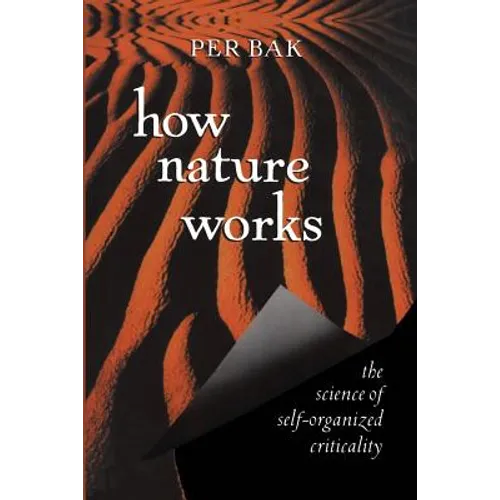
How Nature Works: The Science of Self-Organized Criticality - Paperback

$64.78 USD
$64.78 USD
Sale Sold out
Shipping calculated at checkout.
In stock (100 units), ready to be shipped

Available Offers

Fast delivery available on most orders

Multiple secure payment options accepted

Secure checkout with
  • American Express
  • Apple Pay
  • Diners Club
  • Discover
  • Google Pay
  • Mastercard
  • PayPal
  • Shop Pay
  • Visa

Flight Range: Up to 1,000 meters (3,280 feet)

Maximum Speed: 45 kilometers per hour (28 miles per hour)

For all orders exceeding a value of 100USD shipping is offered for free.

Returns will be accepted for up to 10 days of Customer’s receipt or tracking number on unworn items. You, as a Customer, are obliged to inform us via email before you return the item.

Otherwise, standard shipping charges apply. Check out our delivery Terms & Conditions for more details.

View Product Details
Shopping cart
Product Product subtotal Quantity Price Product subtotal
How Nature Works: The Science of Self-Organized Criticality - Paperback
$64.78/ea
$0.00
$64.78/ea $0.00

Product Description

by Per Bak (Author)

and acknowledgments Self-organized criticality is a new way of viewing nature. The basic picture is one where nature is perpetually out of balance, but organized in a poised state-the critical state-where anything can happen within well-defined statistical laws. The aim of the science of self-organized criticality is to yield insight into the fundamental question of why nature is complex, not simple, as the laws of physics imply. Self-organized criticality explains some ubiquitous patterns existing in nature that we view as complex. Fractal structure and catastrophic events are among those regularities. Applications range from the study of pulsars and black holes to earthquakes and the evolution of life. One intriguing conse- quence of the theory is that catastrophes can occur for no reason whatsoever. Mass extinctions may take place without any external triggering mechanism such as a volcanic eruption or a meteorite hitting the earth (although the the- ory of course cannot rule out that this has in fact occurred). xu How Nature Works Since we first proposed the idea in 1987, more than 2, ooo papers have been written on self-organized criticality, making ours the most cited paper in physics during that period. How Nature Works is the first book to deal with the subject. The basic idea is simple, and most of the mathematical models that have been used in the implementation of the theory are not complicated.


Number of Pages: 212
Dimensions: 0.74 x 9.15 x 6.14 IN
Illustrated: Yes
Publication Date: April 23, 1999
you might like
