Skip to content
Save 5% on your next order with code PREMIUM5!
100,000+ Products for Home, Medical, Office & Classroom Needs
Search
Skip to product information
1 of 1

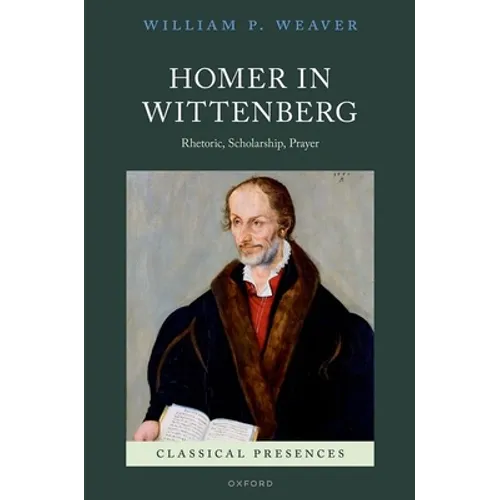
Homer in Wittenberg: Rhetoric, Scholarship, Prayer - Hardcover

$188.10 USD
$188.10 USD
Sale Sold out
Shipping calculated at checkout.

Available Offers

Fast delivery available on most orders

Multiple secure payment options accepted

Secure checkout with
  • American Express
  • Apple Pay
  • Diners Club
  • Discover
  • Google Pay
  • Mastercard
  • PayPal
  • Shop Pay
  • Visa

Flight Range: Up to 1,000 meters (3,280 feet)

Maximum Speed: 45 kilometers per hour (28 miles per hour)

For all orders exceeding a value of 100USD shipping is offered for free.

Returns will be accepted for up to 10 days of Customer’s receipt or tracking number on unworn items. You, as a Customer, are obliged to inform us via email before you return the item.

Otherwise, standard shipping charges apply. Check out our delivery Terms & Conditions for more details.

View Product Details
Shopping cart
Product Product subtotal Quantity Price Product subtotal
Homer in Wittenberg: Rhetoric, Scholarship, Prayer - Hardcover
$188.10/ea
$0.00
Sold out
$188.10/ea $0.00

Product Description

by William P. Weaver (Author)

Homer in Wittenberg draws on manuscript and printed materials to demonstrate Homer's foundational significance for educational and theological reform during the Reformation in Wittenberg. In the first study of Melanchthon's Homer annotations from three different periods spanning his career, and the first book-length study of his reading of a classical author, William Weaver offers a new perspective on the liberal arts and textual authority in the Renaissance and Reformation. Melanchthon's significance in the teaching of the liberal arts has long been recognized, but Homer's prominent place in his educational reforms is not widely known. Homer was instrumental in Melanchthon's attempt to transform the university curriculum, and his reforms of the liberal arts are clarified by his engagements with Homeric speech, a subject of interest in recent Homer scholarship. Beginning with his Greek grammar published just as he arrived in Wittenberg in 1518, and proceeding through his 1547
work on dialectic, Homer in Wittenberg shows that teaching Homer decisively shaped Melanchthon's redesign of grammar, logic, and rhetoric. Melanchthon embarked on reforming the liberal arts with the ultimate objective of reforming theological education. His teaching of Homer illustrates the philosophical principles behind his use of well-known theological terms including sola scriptura, law and gospel, and loci communes. Homer's significance extended even to a practical theology of prayer, and Wittenberg scholia on Homer from the 1550s illustrate how the Homeric poem could be used to exercise faith as well as literary judgment and eloquence.

Author Biography


William P. Weaver, Professor of Literature in the Honors College, Baylor University

William P. Weaver is Professor of Literature in the Honors College at Baylor University. He received his PhD in English and Comparative Literature at Columbia University. From 2015 to 2018 he was a Humboldt Fellow. He co-edited an edition of Philip Melanchthon's writings on rhetoric (De Gruyter, 2017), and is the author of numerous articles on rhetoric, poetry, and the classical tradition in the Renaissance.
Number of Pages: 240
Dimensions: 1.2 x 9 x 6.4 IN
Publication Date: February 17, 2023
you might like