


Product Description
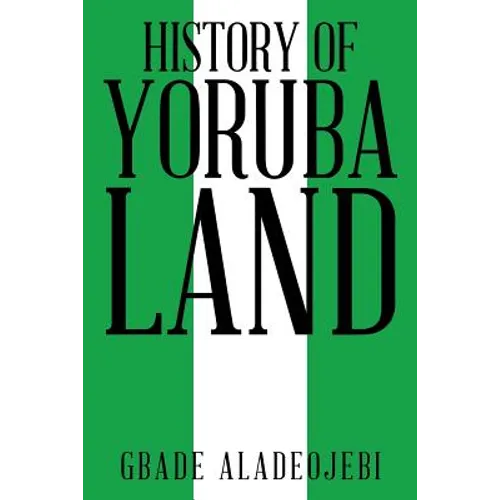
by Gbade Aladeojebi (Author)
The name Nigeria was coined in Lokoja by Flora Shaw, the future wife of Baron Lugard, a British colonial administrator, while gazing out at the river Niger. So, British colonialism created Nigeria as a country, joining diverse peoples and regions in an artificial political entity along the Niger River. The territory known today as Nigeria is a very large country of multi-ethnic groups of about four hundred. The land mass is large enough to accommodate France, Belgium and Italy. The name Nigeria is derived from the River Niger which traverses the country from the North to the South. Nigeria is located on the coast of Western Africa. It has an area of 356,669 square miles (923,768 square km). At its greatest expanse, it measures about 1,200 kilometres (about 750 mi) from East to West and about 1,050 kilometres (about 650 mi) from North to South. It is bordered to the north by Niger, the east by Chad and Cameroon, the south by the Gulf of Guinea, and to the west by Benin. Niger River and the Benue, are its largest tributary, are the principal rivers in the country. The area that is now Nigeria was home to ethnically based kingdoms and tribal communities before it became a European colony. In spite of European contact that began in the 16th century, these kingdoms and communities maintains their autonomy until the 19th century. Federal Republic of Nigeria is a constitutional Federal Republic comprising 36 states and the Federal Capital Territory in Abuja. The principal groups in the Northern part are Hausa, Fulani, Kanuri, and Nupe. Other minority tribes also inhabits the Middle belt area, these include the Jukun, the Chamba and the Bata. In the region north of the upper Benue valley various ethnic groups such as Fali, Gabun, Gude, Gudu, Higi, Hona Mbula, Mumuye and Tika also inhabits the area. In the Southwest we have the Yoruba, another principal ethnic group and in the Southeast we have the Igbo people which form the third principal ethnic group. In the South-south we have the group of minorities such as Annang, Efik, Ibibio, Ijaw, Itsekiri, Isoko Uhrobo and Ukwiani. The entire ethnic group in Nigeria is over 500, parts of these are listed in appropriate section of this book.