Product Description
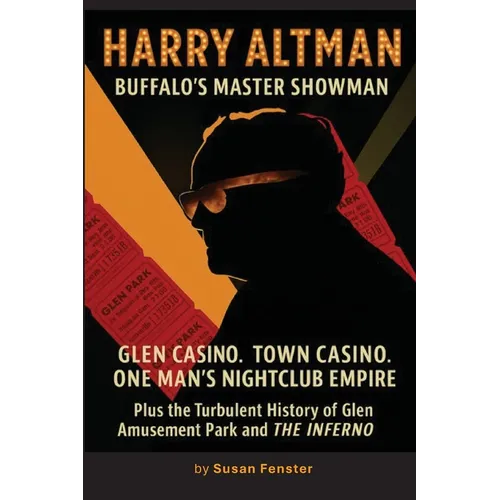
by Susan Fenster (Author)
During the 1940s and 50s, the Glen Casino and Town Casino were nationally prominent nightclubs that featured the most celebrated entertainers of the era. Names like Sammy Davis, Jr., Jayne Mansfield, Vic Damone, Al Martino, and Johnnie Ray were just a handful of celebrities that Altman brought to WNY for "three shows a night."
Beyond the glitter and glamour is a story about the last-born son of impoverished Russian Jewish immigrants. Beginning his career as a glove salesman traveling across the northeast with life-long friend and future movie mogul Sam Goldwyn, Altman spends the early 1900s scraping by as an event promoter and the co-owner of marginally successful niteries, roller rinks and ballrooms throughout the region.
Just weeks away from personal financial ruin-and only months after the start of the Great Depression -- Altman purchases at a bankruptcy auction a nine-acre picnic grove in the heart of Williamsville, NY. Perhaps, he believes, he can turn a profit on this beleaguered parcel of property that had recently served as a "picnic grove" after years of industrial use. It seemed worth of the investment.
Using every trick in his promotional arsenal, he spends more than a decade experimenting with entertainment of all kinds in the Glen. By the early 1940s, he finds his winning formula with the construction of a 1,000-seat nightclub alongside a popular kiddie amusement park.
But financial success does not bring an end to his troubles. He continues to struggle under the strain of anti-Semitic rhetoric, pressure from members of Organized Crime, and his own personal demons. Yet, he remains undeterred.
Williamsville in the early 40s was little more than a rural outpost, and Altman's patrons showed a reluctance to the Glen during the severe winter weather.
Deciding to expand the nightclub business in a more centralized location, he partners up with Harry Wallens to open the Town Barn (and, later, Town Casino) in downtown Buffalo.
If the Glen is gold, The Town is platinum. Its all-star performances were followed regularly by the nation's leading entertainment columnists.
But the center could not hold forever. Television and the growth of Las Vegas ended the lure of nightclub activity. By 1966, both Altman and Wallens have died. Both nightclubs have been sold. In the fall of 1966, Altman's son-in-law decides to lease the casino and transform it into a rock 'n' roll venue.
The newly branded property, The Inferno, is a huge hit among area youth who are there to hear future rock and R&B legends. But the building's legacy ends on the morning in Sept. 1968 when the building goes up in (oh, the irony) an inferno.