


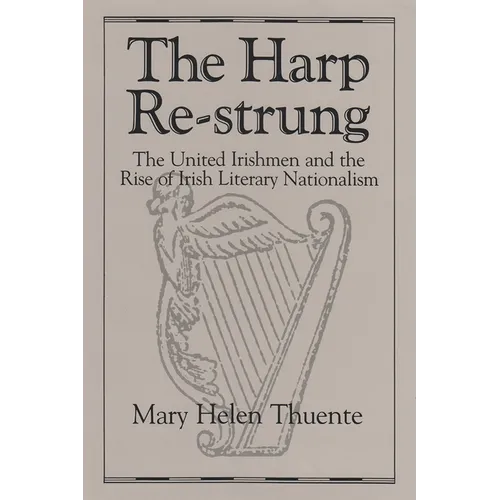
Product Description
by Mary Thuente (Author)
Mary Helen Thuente pushes the clock back, some fifty years, as she demonstrates in The Harp Re-strung that Irish literary nationalism actually began in the 1790s, with the United Irish movement, rather than in the 1840s, as has been generally accepted.
The United Irish movement began as a club of paramilitary reformers in Belfast in 1791. Influenced by the French Revolution and related movements, these sons of the Enlightenment became ever more radical. Within five or six years, what had been a small club of intellectuals and political agitators resulted in a mass movement that was committed to overthrowing British rule in Ireland. By reevaluating the writings associated with the United Irish movement, especially the works of Thomas Moore and the Young Ireland writers, their context within the culture, and their impact on subsequent Irish nationalistic writing, Thuente establishes that the movement played a pivotal role in the development of Irish literary nationalism. She provides a rich balance in her treatment of elite and popular cultures, salvages information previously ignored by critics, and invites readers to look anew at the history and propaganda of the movement.Back Jacket
Mary Helen Thuente pushes the clock back, some fifty years, as she demonstrates in The Harp Re-strung that Irish Literary nationalism actually began in the 1790s, with the United Irish movement, rather than in the 1840s, as has been generally accepted. By reevaluating the writings associated with the United Irish movement, especially the works of Thomas Moore and the Young Ireland writers, their context within the culture, and their impact on subsequent Irish nationalistic writing, Thuente establishes that the movement played a pivotal role in the development of Irish literary nationalism. She provides a rich balance in her treatment of elite and popular cultures, salvages information previously ignored by critics, and invites readers to look anew at the history and propaganda of the movement. The United Irishmen began as a club of parliamentary reformers in Belfast in 1791. Influenced by the French Revolution and related movements, these sons of the Enlightenment became ever more radical. Within five or six years, what had been a small club of intellectuals and political agitators resulted in a mass movement that was committed to overthrowing British rule in Ireland. The conventional view of this group overlooks their literary contributions and thus the full significance of their cause. Thuente seeks to recover both the writings associated with the United Irishmen and the cultural contexts to their movement to demonstrate that the literary contribution was as significant as their political effect. By making available to scholars an impressive array of little-known material, the author calls for a reassessment of the origins of Irish national literature.
Author Biography
Mary Helen Thuente is professor of English at North Carolina State University. She is the author of W. B. Yeats and Irish Folklore.



