Skip to content
Save 5% on your next order with code PREMIUM5!
100,000+ Products for Home, Medical, Office & Classroom Needs
Search
Skip to product information
1 of 1

Habit Forming: Drug Addiction in America, 1776-1914 - Paperback

$75.22 USD
$75.22 USD
Sale Sold out
Shipping calculated at checkout.
In stock (100 units), ready to be shipped

Available Offers

Fast delivery available on most orders

Multiple secure payment options accepted

Secure checkout with
  • American Express
  • Apple Pay
  • Diners Club
  • Discover
  • Google Pay
  • Mastercard
  • PayPal
  • Shop Pay
  • Visa

Flight Range: Up to 1,000 meters (3,280 feet)

Maximum Speed: 45 kilometers per hour (28 miles per hour)

For all orders exceeding a value of 100USD shipping is offered for free.

Returns will be accepted for up to 10 days of Customer’s receipt or tracking number on unworn items. You, as a Customer, are obliged to inform us via email before you return the item.

Otherwise, standard shipping charges apply. Check out our delivery Terms & Conditions for more details.

View Product Details
Shopping cart
Product Product subtotal Quantity Price Product subtotal
Habit Forming: Drug Addiction in America, 1776-1914 - Paperback
$75.22/ea
$0.00
$75.22/ea $0.00

Product Description

by Elizabeth Kelly Gray (Author)

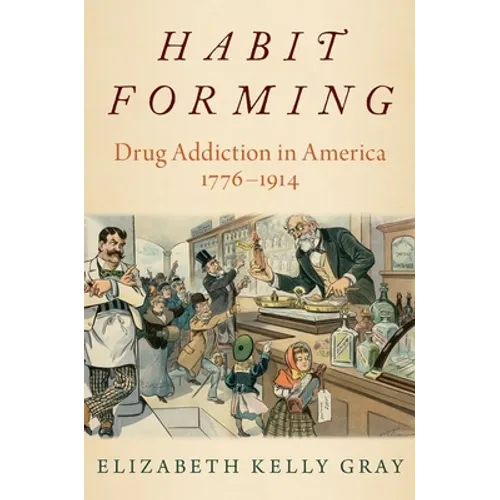
Habitual drug use in the United States is at least as old as the nation itself. Habit Forming traces the history of unregulated drug use and dependency before 1914, when the Harrison Narcotic Tax Act limited sales of opiates and cocaine under US law. Many Americans used opiates and other drugs medically and became addicted. Some tried Hasheesh Candy, injected morphine, or visited opium dens, but neither use nor addiction was linked to crime, due to the dearth of restrictive laws. After the Civil War, American presses published extensively about domestic addiction. Later in the nineteenth century, many used cocaine and heroin as medicine. As addiction became a major public health issue, commentators typically sympathized with white, middle-class drug users, while criticizing such use by poor or working-class people and people of color. When habituation was associated with middle-class morphine users, few advocated for restricted drug access. By the 1910s, as use was increasingly associated with poor young men, support for regulations increased. In outlawing users' access to habit-forming drugs at the national level, a public health problem became a larger legal and social problem, one with an enduring influence on American drug laws and their enforcement.

Author Biography

Elizabeth Kelly Gray is Associate Professor of History at Towson University.

Number of Pages: 352
Dimensions: 0.93 x 9.3 x 6.17 IN
Illustrated: Yes
Publication Date: December 16, 2022
you might like

