Product Description
by Edward Juler (Author)
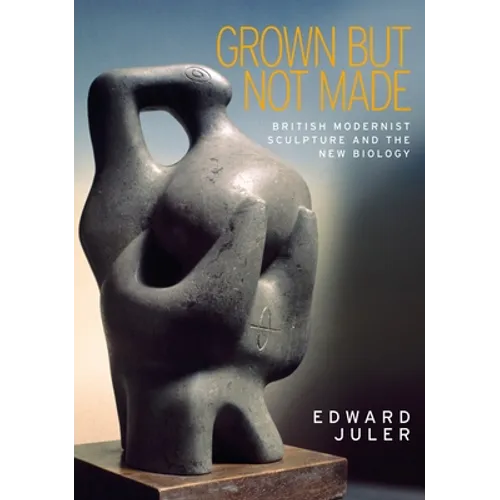
What does it mean for a sculpture to be described as 'organic' or a diagram of 'morphological forces'? These were questions that preoccupied Modernist sculptors and critics in Britain as they wrestled with the artistic implications of biological discovery during the 1930s. In this lucid and thought-provoking book, Edward Juler provides the first detailed critical history of British Modernist sculpture's interaction with modern biology. Discussing the significant influence of biologists and scientific philosophers such as D'Arcy Wentworth Thompson, Julian Huxley, J. S. Haldane and Alfred North Whitehead on interwar Modernist practice, this book provides radical new interpretations of the work of key British Modernist artists and critics, including Henry Moore, Barbara Hepworth, Paul Nash and Herbert Read. Innovative and interdisciplinary, this pioneering book will appeal to students of art history and the history of science as well as anyone interested in the complex, interweaving histories of art and science in the twentieth century.
Front Jacket
What does it mean for a sculpture to be described as 'organic'? How can a carving in wood or stone be understood to be a diagram of morphological forces? These were questions which preoccupied Modernist sculptors and critics in interwar Britain as they wrestled with the artistic implications of the new age of biological discovery. In this lucid and thought-provoking book, Edward Juler provides the first major critical history of British Modernist sculpture's interaction with modern biology. Through a series of interlinked, thematic chapters Juler explores how biological ideas pertaining to evolution, organicism, morphology and microscopy found resonance in the artworks and writings of key Modernist artists and critics, including Henry Moore, Barbara Hepworth, Paul Nash and Herbert Read. Offering a compelling account of artistic Modernism's intellectual proclivities and scientific interests, the author examines a wide range of primary sources, both artistic and scientific, and provides a nuanced historical analysis of the biological leitmotifs which appeared, time and again, in the sculptures and drawings produced by British Modernist sculptors during the 1930s. Juler studies the birth and popularisation of the 'New Biology' and provides a radically new interpretation of a vital moment in the history of Modernist sculpture when biologists - such as D'Arcy Wentworth Thompson, Julian Huxley and J.S. Haldane - captured the imagination of the British avant-garde. Innovative and interdisciplinary, this book will appeal to students of art history and the history of science as well as anyone interested in the complex, interwoven histories of art and science in the twentieth century.
Back Jacket
What does it mean for a sculpture to be described as 'organic'? How can a carving in wood or stone be understood to be a diagram of morphological forces? These were questions which preoccupied Modernist sculptors and critics in interwar Britain as they wrestled with the artistic implications of the new age of biological discovery. In this lucid and thought-provoking book, Edward Juler provides the first major critical history of British Modernist sculpture's interaction with modern biology. Through a series of interlinked, thematic chapters Juler explores how biological ideas pertaining to evolution, organicism, morphology and microscopy found resonance in the artworks and writings of key Modernist artists and critics, including Henry Moore, Barbara Hepworth, Paul Nash and Herbert Read.
Offering a compelling account of artistic Modernism's intellectual proclivities and scientific interests, the author examines a wide range of primary sources, both artistic and scientific, and provides a nuanced historical analysis of the biological leitmotifs which appeared, time and again, in the sculptures and drawings produced by British Modernist sculptors during the 1930s. Juler studies the birth and popularisation of the 'New Biology' and provides a radically new interpretation of a vital moment in the history of Modernist sculpture when biologists - such as D'Arcy Wentworth Thompson, Julian Huxley and J.S. Haldane - captured the imagination of the British avant-garde. Innovative and interdisciplinary, this book will appeal to students of art history and the history of science as well as anyone interested in the complex, interwoven histories of art and science in the twentieth century.Author Biography
Edward Juler is Lecturer at Newcastle University