


Product Description
by Jessica Hernandez (Author)
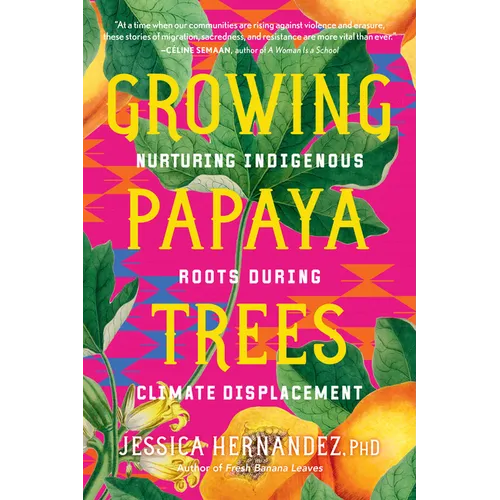
Leading Binnizá and Maya Ch'orti' scientist Jessica Hernandez, PhD, weaves together Indigenous knowledge, environmental science, and personal family stories in her highly anticipated follow-up to the LA Times best-seller Fresh Banana Leaves.
Not every environmental problem is a result of climate change, but every environmental and climate change problem is a result of colonialism. Dr. Jessica Hernandez offers readers an Indigenous, Global-South lens on the climate crisis, delivering a compelling and urgent exploration of its causes--and its costs. She shares how the impacts of colonial climate catastrophe--from warming oceans to forced displacement of settler ontologies--can only be addressed at the root if we reorient toward Indigenous science and follow the lead of Indigenous peoples and communities. Growing Papaya Trees explores:- Energy as a sociopolitical issue
- The interconnectedness of natural disasters, sociopolitical turmoil, and forced migration
- Our oceans, our forests, and our Indigenous futures
- Moving Indigenous science from mere acknowledgement into real action
- How to nourish Indigenous roots when displaced beyond borders
Dr. Hernandez asks: what does it mean to be Indigenous when we're separated from our lands? How do we nurture future generations knowing they, too, will have to live away from their ancestral places? She illuminates that cultures are not lost, even amid genocide, turmoil, war, and climate displacement--and shows us how to be better kin to each other against the ecological violence, colonial oppression, and distorted status quo of the Global North.
Author Biography
JESSICA HERNANDEZ, Ph.D., is an Indigenous scholar, scientist, and community advocate based in the Pacific Northwest. She has an interdisciplinary academic background ranging from marine sciences to forestry. Her work is grounded on her Indigenous cultures and ways of knowing that are rooted from El Salvador (Maya Ch'orti') and Oaxaca, Mexico (Zapotec). She advocates for food, climate, and environmental justice through her scientific and community work and strongly believes that Indigenous sciences can heal our Indigenous lands. She was raised in South Central Los Angeles and in 2020, she became the first alum from her high school to receive and complete a doctoral degree. She is the founder of Pina Soul, SPC, an environmental consulting and artesanias hybrid business that promotes and supports environmental sustainability and conservation among Black and Indigenous communities.