Skip to content
Welcome To Our Store.
100,000+ Products for Home, Medical, Office & Classroom Needs
Search
Skip to product information
1 of 1

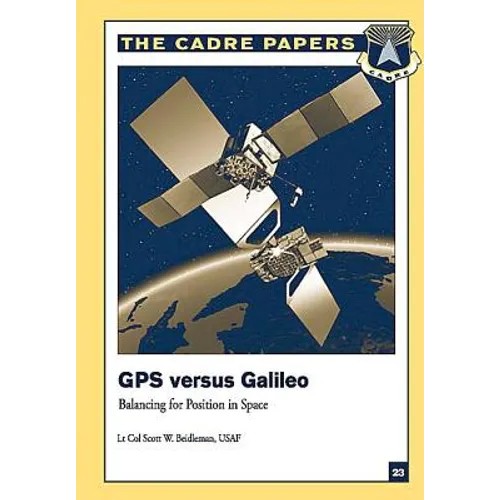
GPS Versus Galileo: Balancing for Position in Space: CADRE Paper No. 23 - Paperback

$21.31 USD
$21.31 USD
Sale Sold out
Shipping calculated at checkout.
In stock (100 units), ready to be shipped

Available Offers

Fastest Delivery Tomorrow With Vip DealOrder within 1 hr 8 mins.

Instant 10% Discount On HDFC Banks Credit/Debit Cards EMI and CreditCard

Secure checkout with
  • American Express
  • Apple Pay
  • Diners Club
  • Discover
  • Google Pay
  • Mastercard
  • PayPal
  • Shop Pay
  • Visa

Flight Range: Up to 1,000 meters (3,280 feet)

Maximum Speed: 45 kilometers per hour (28 miles per hour)

For all orders exceeding a value of 100USD shipping is offered for free.

Returns will be accepted for up to 10 days of Customer’s receipt or tracking number on unworn items. You, as a Customer, are obliged to inform us via email before you return the item.

Otherwise, standard shipping charges apply. Check out our delivery Terms & Conditions for more details.

View Product Details
Shopping cart
Product Product subtotal Quantity Price Product subtotal
GPS Versus Galileo: Balancing for Position in Space: CADRE Paper No. 23 - Paperback
$21.31/ea
$0.00
$21.31/ea $0.00

Product Description

by Air University Press (Contribution by), Lieutenant Colonel Usaf Sco Beidleman (Author)

This study investigates Europe's motives to develop the independent satellite navigation system known as Galileo despite the existence of America's successful global positioning system (GPS). The study begins by analyzing both systems to familiarize the reader with global navigation satellite systems (GNSS) and to provide an understanding of the strengths and weaknesses of GPS and Galileo, as well as the systems' similarities and differences. Although the two systems have different founding principles, they employ similar infrastructures and operational concepts. I the short term, Galileo will provide better accuracy for civilian users until GPS upgrades take effect. But performance is only part of the rationale. The author contends that Europe's pursuit of Galileo is driven by a combination of reasons, including performance, independence, and economic incentive. With Galileo, Europe hopes to achieve political, security, and technological independence from the United States. Additionally, Europe envisions overcoming the US monopoly on GNSS by seizing a sizable share of the expanding GNSS market and setting a new world standard for satellite navigation. Finally, the author explores Galileo's impact on the United States and reviews US policy towards Galileo. The study concludes with recommendations to strengthen the competitiveness of GPS.


Number of Pages: 94
Dimensions: 0.19 x 9.61 x 6.69 IN
Publication Date: August 18, 2012
you might like
