


Product Description
by Thomas Ferguson (Author)
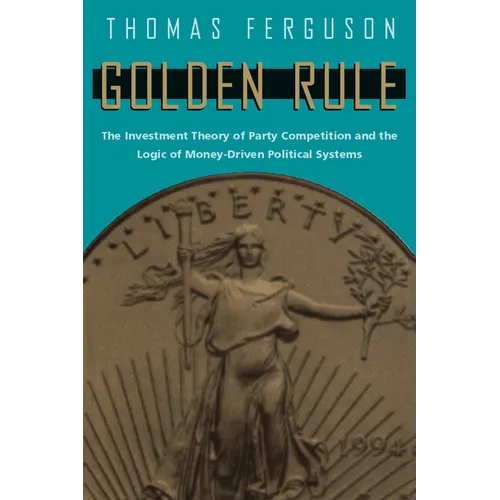
"To discover who rules, follow the gold." This is the argument of Golden Rule, a provocative, pungent history of modern American politics. Although the role big money plays in defining political outcomes has long been obvious to ordinary Americans, most pundits and scholars have virtually dismissed this assumption. Even in light of skyrocketing campaign costs, the belief that major financial interests primarily determine who parties nominate and where they stand on the issues--that, in effect, Democrats and Republicans are merely the left and right wings of the "Property Party"--has been ignored by most political scientists. Offering evidence ranging from the nineteenth century to the 1994 mid-term elections, Golden Rule shows that voters are "right on the money."
Thomas Ferguson breaks completely with traditional voter centered accounts of party politics. In its place he outlines an "investment approach," in which powerful investors, not unorganized voters, dominate campaigns and elections. Because businesses "invest" in political parties and their candidates, changes in industrial structures--between large firms and sectors--can alter the agenda of party politics and the shape of public policy. Golden Rule presents revised versions of widely read essays in which Ferguson advanced and tested his theory, including his seminal study of the role played by capital intensive multinationals and international financiers in the New Deal. The chapter "Studies in Money Driven Politics" brings this aspect of American politics into better focus, along with other studies of Federal Reserve policy making and campaign finance in the 1936 election. Ferguson analyzes how a changing world economy and other social developments broke up the New Deal system in our own time, through careful studies of the 1988 and 1992 elections. The essay on 1992 contains an extended analysis of the emergence of the Clinton coalition and Ross Perot's dramatic independent insurgency. A postscript on the 1994 elections demonstrates the controlling impact of money on several key campaigns. This controversial work by a theorist of money and politics in the U.S. relates to issues in campaign finance reform, PACs, policymaking, public financing, and how today's elections work.


