Skip to content
Save 5% on your next order with code PREMIUM5!
100,000+ Products for Home, Medical, Office & Classroom Needs
Search
Skip to product information
1 of 1

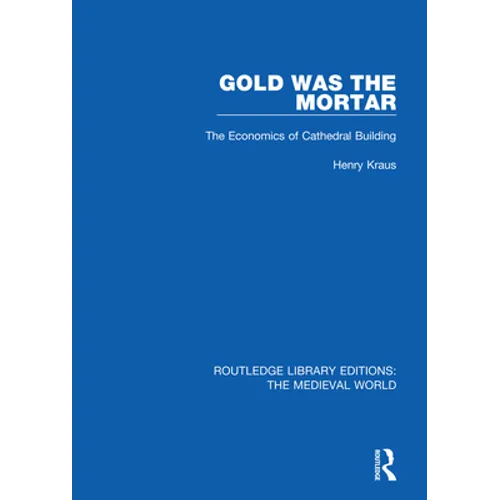
Gold Was the Mortar: The Economics of Cathedral Building - Paperback

$80.98 USD
$80.98 USD
Sale Sold out
Shipping calculated at checkout.
In stock (100 units), ready to be shipped

Available Offers

Fast delivery available on most orders

Multiple secure payment options accepted

Secure checkout with
  • American Express
  • Apple Pay
  • Diners Club
  • Discover
  • Google Pay
  • Mastercard
  • PayPal
  • Shop Pay
  • Visa

Flight Range: Up to 1,000 meters (3,280 feet)

Maximum Speed: 45 kilometers per hour (28 miles per hour)

For all orders exceeding a value of 100USD shipping is offered for free.

Returns will be accepted for up to 10 days of Customer’s receipt or tracking number on unworn items. You, as a Customer, are obliged to inform us via email before you return the item.

Otherwise, standard shipping charges apply. Check out our delivery Terms & Conditions for more details.

View Product Details
Shopping cart
Product Product subtotal Quantity Price Product subtotal
Gold Was the Mortar: The Economics of Cathedral Building - Paperback
$80.98/ea
$0.00
$80.98/ea $0.00

Product Description

by Henry Kraus (Author)

Originally published in 1979, Gold Was the Mortar details the financing and the building of the medieval cathedrals at Paris, Amiens, Toulouse, Lyon, Strasbourg, York, Poitiers and Rouen. The book examines the raising of funds and their expenditure, not only on the Cathedrals themselves, but also on the worldly ambitions of the bishop or archbishop, which went beyond the 'wars and natural disasters' theory to explain the reasons that caused the delays in building the cathedrals. The book also looks at the issues of building the cathedrals, such as the availability of finance and how for some there was a steady flow of funds while others suffered prolonged breaks. The book also provides case studies of specific cathedrals and examines how places such as York were held up by the internecine disputes with Canterbury; Toulouse and Poiters by the vast expropriations following conquests; and Lyon by the suppression of the commercial and social hierarchy. All the cathedrals depended on the benevolence of patrons, but the part played by the commoners, as revealed in wills and contemporary documents, was an extraordinary contribution, usually exceeding that of the nobility and royalty and sometimes that of the hierarchy itself.

Number of Pages: 294
Dimensions: 0.7 x 9.6 x 6.8 IN
Publication Date: December 31, 2020
you might like
