


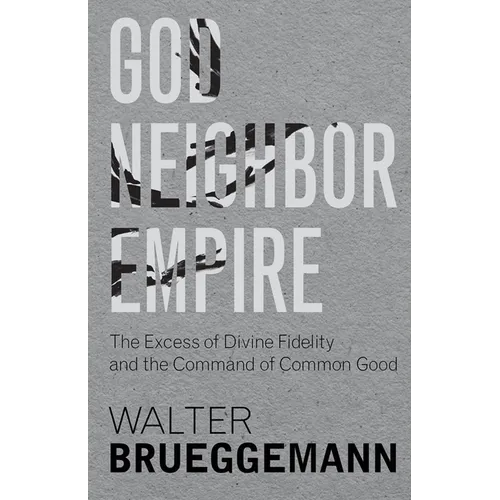
Product Description
by Walter Brueggemann (Author), Tim A. Dearborn (Foreword by)
Justice, mercy, and the public good all find meaning in relationship--a relationship dependent upon fidelity, but endlessly open to the betrayals of infidelity. This paradox defines the story of God and Israel in the Old Testament. Yet the arc of this story reaches ever forward, and its trajectory confers meaning upon human relationships and communities in the present. The Old Testament still speaks.
Israel, in the Old Testament, bears witness to a God who initiates and then sustains covenantal relationships. God, in mercy, does so by making promises for a just well-being and prescribing stipulations for the covenant partner's obedience. The nature of the relationship itself decisively depends upon the conduct, practice, and policy of the covenant partner, yet is radically rooted in the character and agency of God--the One who makes promises, initiates covenant, and sustains relationship.
This reflexive, asymmetrical relationship, kept alive in the texts and tradition, now fires contemporary imagination. Justice becomes shaped by the practice of neighborliness, mercy reaches beyond a pervasive quid pro quo calculus, and law becomes a dynamic norming of the community. The well-being of the neighborhood, inspired by the biblical texts, makes possible--and even insists upon--an alternative to the ideology of individualism that governs our society's practice and policy. This kind of community life returns us to the arc of God's gifts--mercy, justice, and law. The covenant of God in the witness of biblical faith speaks now and demands that its interpreting community resist individualism, overcome commoditization, and thwart the rule of empire through a life of radical neighbor love.
Author Biography
Walter Brueggemann is William Marcellus McPheeters Professor of Old Testament Emeritus at Columbia Theological Seminary.



