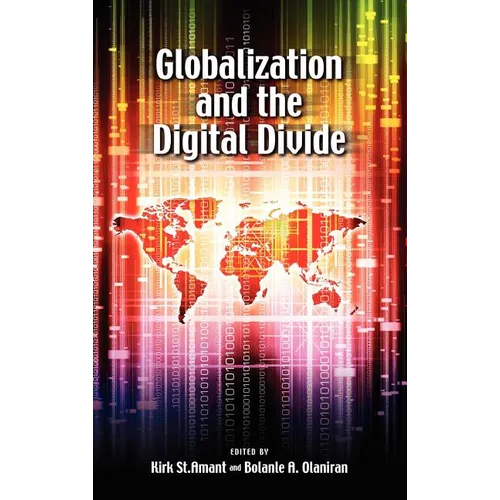
Product Description
by Kirk St Amant (Editor), Bolanle Olaniran (Editor)
The interrelation of globalization, communication, and media has prompted many individuals to view the world in terms of a new dichotomy: the global "wired" (nations with widespread online access) and the global "tired" (nations with very limited online access). In this way, differing levels of online access have created an international rift - the global digital divide. The nature, current status, and future projections related to this rift, in turn, have important implications for all of the world's citizens. Yet these problems are not intractable. Rather, with time and attention, public policies and private sector practices can be developed or revised to close this divide and bring more of the world's citizens to the global stage on a more equal footing. The first step in addressing problems resulting from the global digital divide is to improve understanding, that is, organizations and individuals must understand what factors contribute to this global digital divide for them to address it effectively. From this foundational understanding, organizations can take the kinds of focused, coordinated actions needed to address such international problems effectively. This collection represents an initial step toward examining the global digital divide from the perspective of developing nations and the challenges their citizens face in today's error of communication-driven globalization. The entries in this collection each represent different insights on the digital divide from the perspectives of developing nations - many of which have been overlooked in previous discussions of this topic. This book examines globalization and its effects from the perspective of how differences in access to online communication technologies between the economically developed countries and less economically developed countries is affecting social, economic, educational, and political developments in the world's emerging economies. This collection also examines how this situation is creating a global digital divide that will have adverse consequences for all nations. Each of the book's chapters thus presents trends and ideas related to the global digital divide between economically developed countries and less economically developed nations. Through this approach, the contributors present perspectives from the economically developing nations themselves versus other texts that explore this topic from the perspective of economically developed countries. In this way, the book provides a new and an important perspective to the growing literature on the global digital divide. The primary audiences for this text would include individuals from both academics and industry practitioners. The academic audience would include administrators in education; researchers; university, college, and community college instructors; and students at the advanced undergraduate and graduate levels.