


Product Description
by Amy Sue Bix (Author)
How women coped with both formal barriers and informal opposition to their entry into the traditionally masculine field of engineering in American higher education.
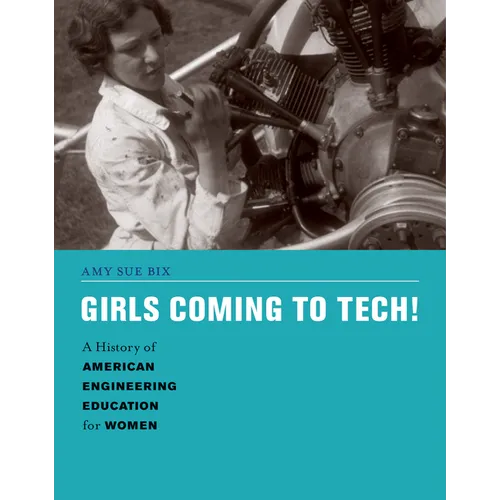
Engineering education in the United States was long regarded as masculine territory. For decades, women who studied or worked in engineering were popularly perceived as oddities, outcasts, unfeminine (or inappropriately feminine in a male world). In Girls Coming to Tech!, Amy Bix tells the story of how women gained entrance to the traditionally male field of engineering in American higher education. As Bix explains, a few women breached the gender-reinforced boundaries of engineering education before World War II. During World War II, government, employers, and colleges actively recruited women to train as engineering aides, channeling them directly into defense work. These wartime training programs set the stage for more engineering schools to open their doors to women. Bix offers three detailed case studies of postwar engineering coeducation. Georgia Tech admitted women in 1952 to avoid a court case, over objections by traditionalists. In 1968, Caltech male students argued that nerds needed a civilizing female presence. At MIT, which had admitted women since the 1870s but treated them as a minor afterthought, feminist-era activists pushed the school to welcome more women and take their talent seriously. In the 1950s, women made up less than one percent of students in American engineering programs; in 2010 and 2011, women earned 18.4% of bachelor's degrees, 22.6% of master's degrees, and 21.8% of doctorates in engineering. Bix's account shows why these gains were hard won.Author Biography
Amy Sue Bix is Professor in the Department of History at Iowa State University, where she is also the Director of the Center for Historical Studies of Technology and Science.
Number of Pages: 376
Dimensions: 0.77 x 9 x 7 IN
Publication Date: November 01, 2022



