Skip to content
Welcome To Our Store.
100,000+ Products for Home, Medical, Office & Classroom Needs
Search
Skip to product information
1 of 1

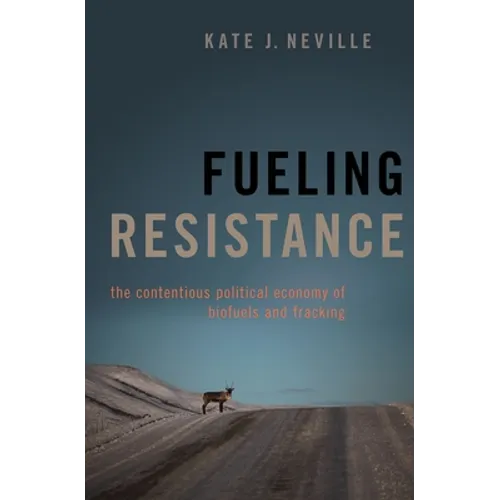
Fueling Resistance: The Contentious Political Economy of Biofuels and Fracking - Hardcover

$152.19 USD
$152.19 USD
Sale Sold out
Shipping calculated at checkout.
In stock (100 units), ready to be shipped

Available Offers

Fastest Delivery Tomorrow With Vip DealOrder within 1 hr 8 mins.

Instant 10% Discount On HDFC Banks Credit/Debit Cards EMI and CreditCard

Secure checkout with
  • American Express
  • Apple Pay
  • Diners Club
  • Discover
  • Google Pay
  • Mastercard
  • PayPal
  • Shop Pay
  • Visa

Flight Range: Up to 1,000 meters (3,280 feet)

Maximum Speed: 45 kilometers per hour (28 miles per hour)

For all orders exceeding a value of 100USD shipping is offered for free.

Returns will be accepted for up to 10 days of Customer’s receipt or tracking number on unworn items. You, as a Customer, are obliged to inform us via email before you return the item.

Otherwise, standard shipping charges apply. Check out our delivery Terms & Conditions for more details.

View Product Details
Shopping cart
Product Product subtotal Quantity Price Product subtotal
Fueling Resistance: The Contentious Political Economy of Biofuels and Fracking - Hardcover
$152.19/ea
$0.00
$152.19/ea $0.00

Product Description

by Kate J. Neville (Author)

A series of concurrent pressures in the early 2000s--climate change, financial system crashes, economic development in rural regions, and shifts in geopolitics--intensified interest in alternative energy production. At the same time, rising oil prices rendered alternative fuels a more economically viable option. Among these energy sources, liquid biofuels (bioethanol and biodiesel) and natural gas derived from hydraulic fracturing ("fracking") took center stage as promising commodities and technologies. But controversy quickly erupted in surprisingly similar ways around both renewable fuels. Global enthusiasm for these fuels--and the widespread projections for their production around the world--collided with local politics in debates over "food versus fuel" and concerns over "land grabs." What seemed, from a global perspective, like empty lands ripe for development were, to rural communities, vibrant and already contested spaces. As proposals for biofuels and fracking landed in
specific communities and ecosystems, they reignited and reshaped old disputes over land, water, and decision-making authority.

Fueling Resistance offers an account of how and why controversies over these different fuels unfolded in surprisingly similar ways in the global North and South. To explain these convergent dynamics of contention and resistance, Kate J. Neville argues that the emergence of grievances and the patterns of resistance to new fuel technologies depends less on the type of energy developed (renewable versus fossil fuel) than on intersecting elements of the political economy of energy: finance, ownership, and trade relations. As local commodities enter global supply chains and are integrated into existing corporate structures, opportunities arise to broker connections between otherwise disparate communities.

Neville looks at biofuels in Kenya and fracking in the Canadian Yukon and shows how organizers connect specific energy projects to broader issues of globalization, climate, food, water, and justice. Taken together, the intersecting elements of the political economy of energy shape the contentious politics of biofuels and fracking at both local and global scales, and help explain how and why particular mechanisms of contention emerge at different times and places.

Author Biography


Kate J. Neville is an Assistant Professor at the University of Toronto, where she is cross-appointed to the Department of Political Science and the School of the Environment. Her research is positioned at the intersection of contentious politics and global political economy, with a focus on contested energy and extractive projects.


Number of Pages: 264
Dimensions: 1 x 9.3 x 6.2 IN
Publication Date: February 01, 2021
you might like
