Product Description
by Paul Harvey (Author)
In a sweeping analysis of religion in the post-Civil War and twentieth-century South, Freedom's Coming puts race and culture at the center, describing southern Protestant cultures as both priestly and prophetic: as southern formal theology sanctified dominant political and social hierarchies, evangelical belief and practice subtly undermined them. The seeds of subversion, Paul Harvey argues, were embedded in the passionate individualism, exuberant expressive forms, and profound faith of believers in the region.
Harvey explains how black and white religious folk within and outside of mainstream religious groups formed a southern "evangelical counterculture" of Christian interracialism that challenged the theologically grounded racism pervasive among white southerners and ultimately helped to end Jim Crow in the South. Moving from the folk theology of segregation to the women who organized the Montgomery bus boycott, from the hymn-inspired freedom songs of the 1960s to the influence of black Pentecostal preachers on Elvis Presley, Harvey deploys cultural history in fresh and innovative ways and fills a decades-old need for a comprehensive history of Protestant religion and its relationship to the central question of race in the South for the postbellum and twentieth-century period.
In a sweeping analysis of religion in the post-Civil War and twentieth-century South, Freedom's Coming puts race and culture at the center, describing southern Protestant cultures as both priestly and prophetic: as southern formal theology sanctified dominant political and social hierarchies, evangelical belief and practice subtly undermined them. Harvey explains how black and white religious folk within and outside of mainstream religious groups formed a southern "evangelical counterculture" of Christian interracialism that challenged the theologically grounded racism pervasive among white southerners and ultimately helped to end Jim Crow in the South.
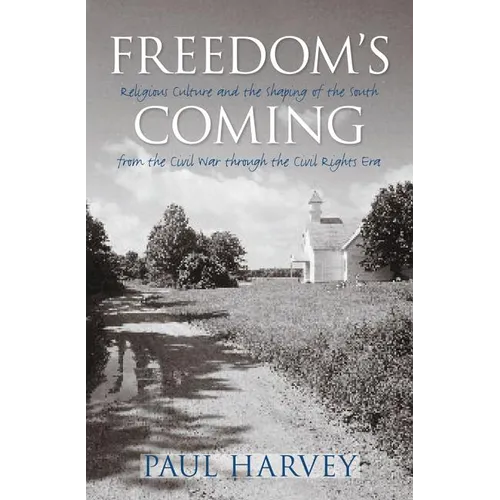
Front Jacket
This sweeping portrait of religion in the South puts race and culture at the center of more than a century of spiritual and political strife. Harvey deploys cultural history in fresh and innovative ways and fills a decades-old need for a comprehensive history of religion and its relationship to the central question of race in the South for the postbellum and twentieth-century period.