


Product Description
by Anthony Reed (Author)
Standard literary criticism tends to either ignore or downplay the unorthodox tradition of black experimental writing that emerged in the wake of protests against colonization and Jim Crow-era segregation. Histories of African American literature likewise have a hard time accounting for the distinctiveness of experimental writing, which is part of a general shift in emphasis among black writers away from appeals for social recognition or raising consciousness. In Freedom Time, Anthony Reed offers a theoretical reading of "black experimental writing" that presents the term both as a profound literary development and as a concept for analyzing how writing challenges us to rethink the relationships between race and literary techniques.
Through extended analyses of works by African American and Afro-Caribbean writers--including N. H. Pritchard, Suzan-Lori Parks, NourbeSe Philip, Kamau Brathwaite, Claudia Rankine, Douglas Kearney, Harryette Mullen, and Nathaniel Mackey--Reed develops a new sense of the literary politics of formally innovative writing and the connections between literature and politics since the 1960s.
Freedom Time reclaims the power of experimental black voices by arguing that readers and critics must see them as more than a mere reflection of the politics of social protest and identity formation. With an approach informed by literary, cultural, African American, and feminist studies, Reed shows how reworking literary materials and conventions liberates writers to push the limits of representation and expression.
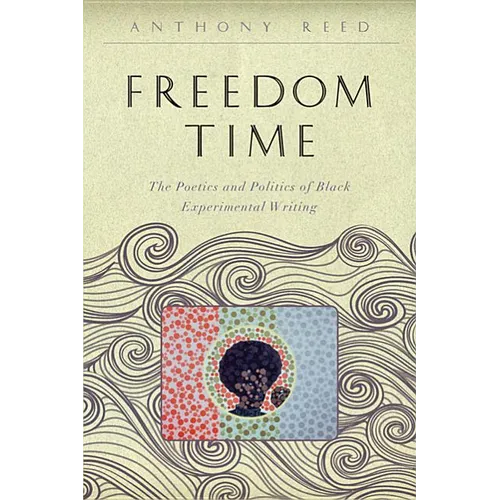
Front Jacket
Winner, 2016 William Sanders Scarborough Prize, Modern Language Association
Standard literary criticism tends to either ignore or downplay the unorthodox tradition of black experimental writing that emerged in the wake of protests against colonization and Jim Crow-era segregation. Histories of African American literature likewise have a hard time accounting for the distinctiveness of experimental writing, which is part of a general shift in emphasis among black writers away from appeals for social recognition or raising consciousness. In Freedom Time, Anthony Reed offers a theoretical reading of black experimental writing that presents the term both as a profound literary development and as a concept for analyzing how writing challenges us to rethink the relationships between race and literary techniques.
Through extended analyses of works by African American and Afro-Caribbean writers--including N. H. Pritchard, Suzan-Lori Parks, NourbeSe Philip, Kamau Brathwaite, Claudia Rankine, Douglas Kearney, Harryette Mullen, and Nathaniel Mackey--Reed develops a new sense of the literary politics of formally innovative writing and the connections between literature and politics since the 1960s.
Freedom Time reclaims the power of experimental black voices by arguing that readers and critics must see them as more than a mere reflection of the politics of social protest and identity formation. With an approach informed by literary, cultural, African American, and feminist studies, Reed shows how reworking literary materials and conventions liberates writers to push the limits of representation and expression.
Reed provides a strong context in which to examine these highly complex writers and their techniques, adding insight into writers who are undervalued (in the case of Mullen and Philip) and/or lesser known (Pritchard and Kearney).--Choice
Insightful and elegant, Freedom Time provides astute, compelling, even breathtaking readings of the structural and theoretical implications of black experimental writing. Brilliantly appropriate, this important book has started a conversation that we must have, and it will anchor that conversation for some time.--Keith D. Leonard, American University, author of Fettered Genius: The African American Bardic Poet from Slavery to Civil Rights
Anthony Reed is an associate professor of English and African American Studies at Yale University.
--Keith D. Leonard, American University, author of Fettered Genius: The African American Bardic Poet from Slavery to Civil Rights "Choice"Back Jacket
Winner, 2016 William Sanders Scarborough Prize, Modern Language Association
Standard literary criticism tends to either ignore or downplay the unorthodox tradition of black experimental writing that emerged in the wake of protests against colonization and Jim Crow-era segregation. Histories of African American literature likewise have a hard time accounting for the distinctiveness of experimental writing, which is part of a general shift in emphasis among black writers away from appeals for social recognition or raising consciousness. In Freedom Time, Anthony Reed offers a theoretical reading of "black experimental writing" that presents the term both as a profound literary development and as a concept for analyzing how writing challenges us to rethink the relationships between race and literary techniques.
Through extended analyses of works by African American and Afro-Caribbean writers--including N. H. Pritchard, Suzan-Lori Parks, NourbeSe Philip, Kamau Brathwaite, Claudia Rankine, Douglas Kearney, Harryette Mullen, and Nathaniel Mackey--Reed develops a new sense of the literary politics of formally innovative writing and the connections between literature and politics since the 1960s.
Freedom Time reclaims the power of experimental black voices by arguing that readers and critics must see them as more than a mere reflection of the politics of social protest and identity formation. With an approach informed by literary, cultural, African American, and feminist studies, Reed shows how reworking literary materials and conventions liberates writers to push the limits of representation and expression.
"Reed provides a strong context in which to examine these highly complex writers and their techniques, adding insight into writers who are undervalued (in the case of Mullen and Philip) and/or lesser known (Pritchard and Kearney)."--Choice
"Insightful and elegant, Freedom Time provides astute, compelling, even breathtaking readings of the structural and theoretical implications of black experimental writing. Brilliantly appropriate, this important book has started a conversation that we must have, and it will anchor that conversation for some time."--Keith D. Leonard, American University, author of Fettered Genius: The African American Bardic Poet from Slavery to Civil Rights
Anthony Reed is an associate professor of English and African American Studies at Yale University.
Author Biography
Anthony Reed is an associate professor of English and African American Studies at Yale University.



