Skip to content
Welcome To Our Store.
100,000+ Products for Home, Medical, Office & Classroom Needs
Search
Skip to product information
1 of 2

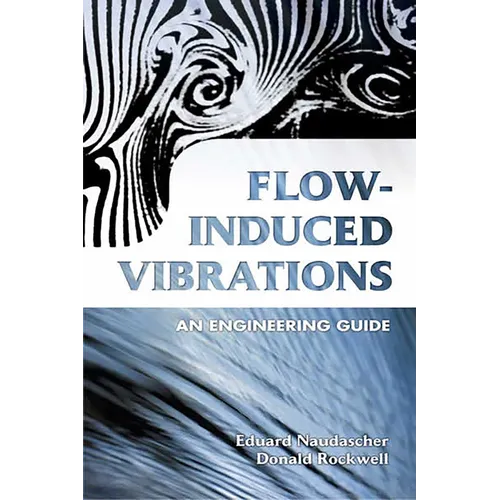
Flow-Induced Vibrations: An Engineering Guide - Paperback

$29.11 USD
$29.11 USD
Sale Sold out
Shipping calculated at checkout.
In stock (100 units), ready to be shipped

Available Offers

Fast delivery available on most orders

Multiple secure payment options accepted

Secure checkout with
  • American Express
  • Apple Pay
  • Diners Club
  • Discover
  • Google Pay
  • Mastercard
  • PayPal
  • Shop Pay
  • Visa

Flight Range: Up to 1,000 meters (3,280 feet)

Maximum Speed: 45 kilometers per hour (28 miles per hour)

For all orders exceeding a value of 100USD shipping is offered for free.

Returns will be accepted for up to 10 days of Customer’s receipt or tracking number on unworn items. You, as a Customer, are obliged to inform us via email before you return the item.

Otherwise, standard shipping charges apply. Check out our delivery Terms & Conditions for more details.

View Product Details
Shopping cart
Product Product subtotal Quantity Price Product subtotal
Flow-Induced Vibrations: An Engineering Guide - Paperback
$29.11/ea
$0.00
$29.11/ea $0.00

Product Description

by Eduard Naudascher (Author), Donald Rockwell (Author)

Despite their variety, the vibration phenomena from many different engineering fields can be classified into a relatively few basic excitation mechanisms. The classification enables engineers to identify all possible sources of excitation in a given system and to assess potential dangers. This graduate-level text presents a synthesis of research results and practical experience from disparate fields in the form of engineering guidelines. It is particularly geared toward assessing the possible sources of excitation in a flow system, in identifying the actual danger spots, and in finding appropriate remedial measures or cures.
Flow-induced vibrations are presented in terms of their basic elements: body oscillators, fluid oscillators, and sources of excitation. By stressing these basic elements, the authors provide a basis for the transfer of knowledge from one system to another, as well as from one engineering field to another. In this manner, well-known theories on cylinders in cross-flow or well-executed solutions from the field of wind engineering--to name just two examples--may be useful in other systems or fields on which information is scarce. The unified approach is broad enough to permit treatment of the major excitation mechanism, yet simple enough to be of practical use.


Number of Pages: 432
Dimensions: 0.84 x 9.22 x 6.32 IN
Illustrated: Yes
Publication Date: July 27, 2005
you might like
