Skip to content
Welcome To Our Store.
100,000+ Products for Home, Medical, Office & Classroom Needs
Search
Skip to product information
1 of 1

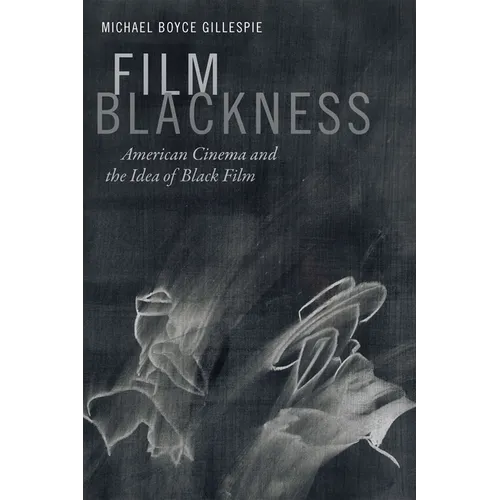
Film Blackness: American Cinema and the Idea of Black Film - Paperback

$43.67 USD
$43.67 USD
Sale Sold out
Shipping calculated at checkout.
In stock (100 units), ready to be shipped

Available Offers

Fast delivery available on most orders

Multiple secure payment options accepted

Secure checkout with
  • American Express
  • Apple Pay
  • Diners Club
  • Discover
  • Google Pay
  • Mastercard
  • PayPal
  • Shop Pay
  • Visa

Flight Range: Up to 1,000 meters (3,280 feet)

Maximum Speed: 45 kilometers per hour (28 miles per hour)

For all orders exceeding a value of 100USD shipping is offered for free.

Returns will be accepted for up to 10 days of Customer’s receipt or tracking number on unworn items. You, as a Customer, are obliged to inform us via email before you return the item.

Otherwise, standard shipping charges apply. Check out our delivery Terms & Conditions for more details.

View Product Details
Shopping cart
Product Product subtotal Quantity Price Product subtotal
Film Blackness: American Cinema and the Idea of Black Film - Paperback
$43.67/ea
$0.00
$43.67/ea $0.00

Product Description

by Michael Boyce Gillespie (Author)

In Film Blackness Michael Boyce Gillespie shifts the ways we think about black film, treating it not as a category, a genre, or strictly a representation of the black experience but as a visual negotiation between film as art and the discursivity of race. Gillespie challenges expectations that black film can or should represent the reality of black life or provide answers to social problems. Instead, he frames black film alongside literature, music, art, photography, and new media, treating it as an interdisciplinary form that enacts black visual and expressive culture. Gillespie discusses the racial grotesque in Ralph Bakshi's Coonskin (1975), black performativity in Wendell B. Harris Jr.'s Chameleon Street (1989), blackness and noir in Bill Duke's Deep Cover (1992), and how place and desire impact blackness in Barry Jenkins's Medicine for Melancholy (2008). Considering how each film represents a distinct conception of the relationship between race and cinema, Gillespie recasts the idea of black film and poses new paradigms for genre, narrative, aesthetics, historiography, and intertextuality.

Author Biography

Michael Boyce Gillespie is Associate Professor of Film in the Department of Media and Communication Arts and the Black Studies Program at the City College of New York, City University of New York.


Number of Pages: 248
Dimensions: 0.6 x 8.9 x 6 IN
Illustrated: Yes
Publication Date: September 09, 2016
you might like
