Skip to content
Save 5% on your next order with code PREMIUM5!
100,000+ Products for Home, Medical, Office & Classroom Needs
Search
Skip to product information
1 of 1

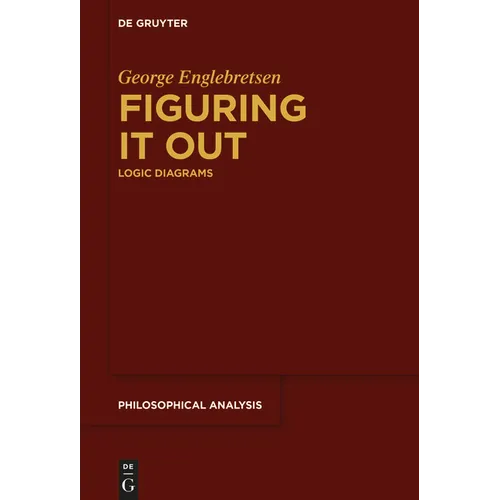
Figuring It Out: Logic Diagrams - Paperback

$34.54 USD
$34.54 USD
Sale Sold out
Shipping calculated at checkout.
In stock (100 units), ready to be shipped

Available Offers

Fast delivery available on most orders

Multiple secure payment options accepted

Secure checkout with
  • American Express
  • Apple Pay
  • Diners Club
  • Discover
  • Google Pay
  • Mastercard
  • PayPal
  • Shop Pay
  • Visa

Flight Range: Up to 1,000 meters (3,280 feet)

Maximum Speed: 45 kilometers per hour (28 miles per hour)

For all orders exceeding a value of 100USD shipping is offered for free.

Returns will be accepted for up to 10 days of Customer’s receipt or tracking number on unworn items. You, as a Customer, are obliged to inform us via email before you return the item.

Otherwise, standard shipping charges apply. Check out our delivery Terms & Conditions for more details.

View Product Details
Shopping cart
Product Product subtotal Quantity Price Product subtotal
Figuring It Out: Logic Diagrams - Paperback
$34.54/ea
$0.00
$34.54/ea $0.00

Product Description

by George Englebretsen (Author), José Martin Castro-Manzano (Contribution by), José Roberto Pacheco-Montes (Contribution by)

The book begins with an extensive survey of the history of logic diagrams, including looking at possible diagrams from Aristotle, the development of both linear and closed figure diagrams by Leibniz, Lambert, Euler, Venn's new system, Peirce's Existential Graphs, and Frege's two-dimensional notation as a kind of logic diagram system. During most of the 20th century, there was little regard for efforts to construct logic diagrams. However, since the 1980s there has been an increasing interest in such diagrams. Ever larger numbers of philosophers, logicians, mathematicians, computational scientists, and cognitive scientists have turned their attention to building, analyzing, using, or exploring in other ways systems of logic diagrams. The system offered here makes use of line segments and points and it enjoys a number of important advantages: it is simple, natural, and both expressively and inferentially powerful. It can be used to analyze syllogisms (including those involving relational terms) and arguments involving unanalyzed statements. Understanding such a system can shed valuable light on how ordinary people naturally reason.

Author Biography

George Englebretsen, Bishop's University, Sherbrooke, Canada.

Number of Pages: 234
Dimensions: 0.54 x 9.21 x 6.14 IN
Publication Date: October 01, 2021
you might like