Skip to content
Welcome To Our Store.
100,000+ Products for Home, Medical, Office & Classroom Needs
Search
Skip to product information
1 of 1

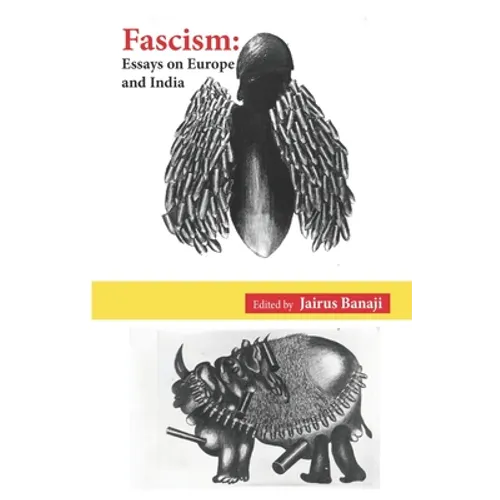
Fascism: Essays on Europe and India - Paperback

$17.48 USD
$17.48 USD
Sale Sold out
Shipping calculated at checkout.
In stock (100 units), ready to be shipped

Available Offers

Fastest Delivery Tomorrow With Vip DealOrder within 1 hr 8 mins.

Instant 10% Discount On HDFC Banks Credit/Debit Cards EMI and CreditCard

Secure checkout with
  • American Express
  • Apple Pay
  • Diners Club
  • Discover
  • Google Pay
  • Mastercard
  • PayPal
  • Shop Pay
  • Visa

Flight Range: Up to 1,000 meters (3,280 feet)

Maximum Speed: 45 kilometers per hour (28 miles per hour)

For all orders exceeding a value of 100USD shipping is offered for free.

Returns will be accepted for up to 10 days of Customer’s receipt or tracking number on unworn items. You, as a Customer, are obliged to inform us via email before you return the item.

Otherwise, standard shipping charges apply. Check out our delivery Terms & Conditions for more details.

View Product Details
Shopping cart
Product Product subtotal Quantity Price Product subtotal
Fascism: Essays on Europe and India - Paperback
$17.48/ea
$0.00
$17.48/ea $0.00

Product Description

by Jairus Banaji (Editor) (Author)

The victory of fascism in Europe between the wars was an incalculable human catastrophe. This collection of essays contains the first-ever English translation of Arthur Rosenberg's fascinating analysis of the emergence of fascism in Europe, as well as a short introduction to the essay that explains its significance, and then four contributions that extend the framework to India - dealing in turn with Savarkar and the politics of the Hindu Mahasabha (Srinivasan), communalism as the Indian version of fascism and its roots in the majoritarian ideologies of the nation-state (Simeon), and the fascism of the Sangh Parivar as this had emerged by the early '90s when concerted communal mobilisations unleashed a spate of violence, foreshadowing the even more horrific events of 2002 (Sumit Sarkar). Unlike most left-wing theories of fascism, Rosenberg's work made the mass base of fascism central to its political success. But what does it mean for fascism to have a "mass base"? And how does it construct one? The concluding chapter explores the notion of "passive complicity", using ideas developed by Jean-Paul Sartre in his major work Critique of Dialectical Reason, and then turns to a characterisation of the Extreme Right in India by looking at the strategies at work in the subversion of Indian democracy.


Number of Pages: 260
Dimensions: 0.55 x 8.5 x 5.5 IN
Illustrated: Yes
Publication Date: January 15, 2016
you might like
