Skip to content
Welcome To Our Store.
100,000+ Products for Home, Medical, Office & Classroom Needs
Search
Skip to product information
1 of 1

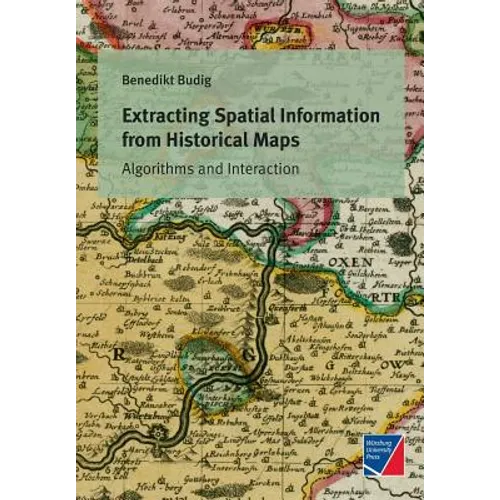
Extracting Spatial Information from Historical Maps - Paperback

$63.45 USD
$63.45 USD
Sale Sold out
Shipping calculated at checkout.
In stock (100 units), ready to be shipped

Available Offers

Fastest Delivery Tomorrow With Vip DealOrder within 1 hr 8 mins.

Instant 10% Discount On HDFC Banks Credit/Debit Cards EMI and CreditCard

Secure checkout with
  • American Express
  • Apple Pay
  • Diners Club
  • Discover
  • Google Pay
  • Mastercard
  • PayPal
  • Shop Pay
  • Visa
  • Daily deals
  • Return policy
  • Payment method
  • Help center 24/7

Flight Range: Up to 1,000 meters (3,280 feet)

Maximum Speed: 45 kilometers per hour (28 miles per hour)

For all orders exceeding a value of 100USD shipping is offered for free.

Returns will be accepted for up to 10 days of Customer’s receipt or tracking number on unworn items. You, as a Customer, are obliged to inform us via email before you return the item.

Otherwise, standard shipping charges apply. Check out our delivery Terms & Conditions for more details.

View Product Details
Shopping cart
Product Product subtotal Quantity Price Product subtotal
Extracting Spatial Information from Historical Maps - Paperback
$63.45/ea
$0.00
$63.45/ea $0.00

Product Description

by Benedikt Budig (Author)

Historical maps are fascinating documents and a valuable source of information for scientists of various disciplines. Many of these maps are available as scanned bitmap images, but in order to make them searchable in useful ways, a structured representation of the contained information is desirable. This book deals with the extraction of spatial information from historical maps. This cannot be expected to be solved fully automatically (since it involves difficult semantics), but is also too tedious to be done manually at scale. The methodology used in this book combines the strengths of both computers and humans: it describes efficient algorithms to largely automate information extraction tasks and pairs these algorithms with smart user interactions to handle what is not understood by the algorithm. The effectiveness of this approach is shown for various kinds of spatial documents from the 16th to the early 20th century.

Number of Pages: 170
Dimensions: 0.36 x 9.61 x 6.69 IN
Publication Date: November 26, 2018
you might like