Skip to content
Save 5% on your next order with code PREMIUM5!
100,000+ Products for Home, Medical, Office & Classroom Needs
Search
Skip to product information
1 of 1

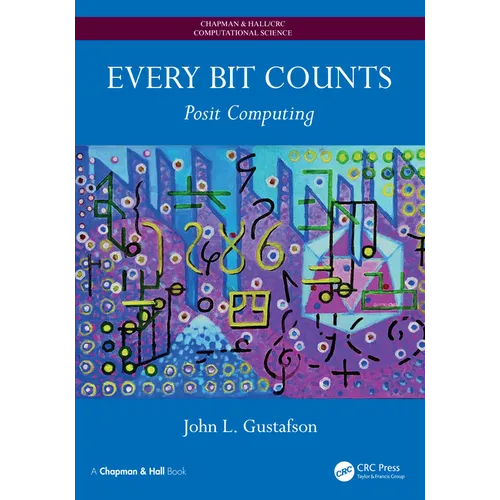
Every Bit Counts: Posit Computing - Paperback

$103.66 USD
$103.66 USD
Sale Sold out
Shipping calculated at checkout.

Available Offers

Fast delivery available on most orders

Multiple secure payment options accepted

Secure checkout with
  • American Express
  • Apple Pay
  • Diners Club
  • Discover
  • Google Pay
  • Mastercard
  • PayPal
  • Shop Pay
  • Visa

Flight Range: Up to 1,000 meters (3,280 feet)

Maximum Speed: 45 kilometers per hour (28 miles per hour)

For all orders exceeding a value of 100USD shipping is offered for free.

Returns will be accepted for up to 10 days of Customer’s receipt or tracking number on unworn items. You, as a Customer, are obliged to inform us via email before you return the item.

Otherwise, standard shipping charges apply. Check out our delivery Terms & Conditions for more details.

View Product Details
Shopping cart
Product Product subtotal Quantity Price Product subtotal
Every Bit Counts: Posit Computing - Paperback
$103.66/ea
$0.00
Sold out
$103.66/ea $0.00

Product Description

by John L. Gustafson (Author)

Written by one of the foremost experts in high-performance computing and the inventor of Gustafson's law, Every Bit Counts: Posit Computing explains the foundations of a new way for computers to calculate that saves time, storage, energy, and power by packing more information into every bit than do legacy approaches. Both the AI and HPC communities are increasingly using the posit approach that Gustafson introduced in 2017, which may be the future of technical computing.

What may seem like a dry subject is made engaging by including the human and historical side of the struggle to represent numbers on machines. The book is richly illustrated in full color throughout, with every effort made to make the material as clear and accessible as possible, and even humorous.

Starting with the simplest form of the idea, the chapters gradually add concepts according to stated mathematical and engineering design principles, building a robust tool kit for creating application-specific number systems. There is also a thorough explanation of the Posit(TM) Standard (2022), with motivations and examples that expand on that terse 12-page document.


Number of Pages: 442
Dimensions: 0.94 x 10 x 7 IN
Illustrated: Yes
Publication Date: November 29, 2024
you might like
