Skip to content
Save 5% on your next order with code PREMIUM5!
100,000+ Products for Home, Medical, Office & Classroom Needs
Search
Skip to product information
1 of 1

European Settlement-Era Vegetation of the Monogahela National Forest, West Virginia - Paperback

$21.58 USD
$21.58 USD
Sale Sold out
Shipping calculated at checkout.
In stock (100 units), ready to be shipped

Available Offers

Fast delivery available on most orders

Multiple secure payment options accepted

Secure checkout with
  • American Express
  • Apple Pay
  • Diners Club
  • Discover
  • Google Pay
  • Mastercard
  • PayPal
  • Shop Pay
  • Visa

Flight Range: Up to 1,000 meters (3,280 feet)

Maximum Speed: 45 kilometers per hour (28 miles per hour)

For all orders exceeding a value of 100USD shipping is offered for free.

Returns will be accepted for up to 10 days of Customer’s receipt or tracking number on unworn items. You, as a Customer, are obliged to inform us via email before you return the item.

Otherwise, standard shipping charges apply. Check out our delivery Terms & Conditions for more details.

View Product Details
Shopping cart
Product Product subtotal Quantity Price Product subtotal
European Settlement-Era Vegetation of the Monogahela National Forest, West Virginia - Paperback
$21.58/ea
$0.00
$21.58/ea $0.00

Product Description

by United States Department of Agriculture (Author)

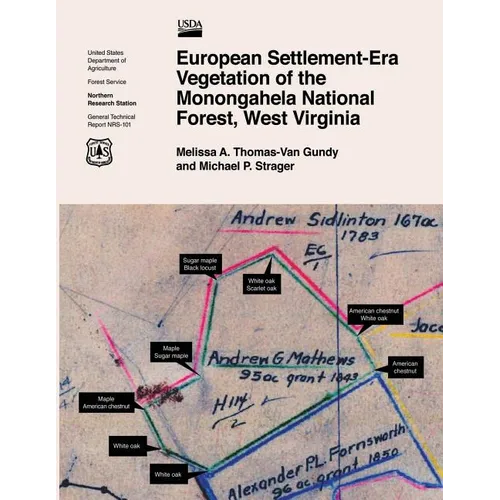
Forest restoration would be greatly helped by understanding just what forests looked like a century or more ago. One source of information on early forests is found in old deeds or surveys, where boundary corners were described by noting nearby trees known as witness trees. This paper describes the creation and analysis of a database of witness trees from original metes and bounds surveys of what became the Monongahela National Forest in West Virginia. We include an estimate of positional error from the conversion of paper maps to digital format. The final database contains 15,589 corners and 22,328 trees of 49 species from deeds dating from 1752 to 1899. White oak was the most frequent witness tree, followed by sugar maple, American beech, and American chestnut, and distribution patterns were recognizable across the study area.


Number of Pages: 42
Dimensions: 0.09 x 11.02 x 8.5 IN
Publication Date: January 02, 2015
you might like
