


Product Description
by Elena Cagnoli Fiecconi (Author)
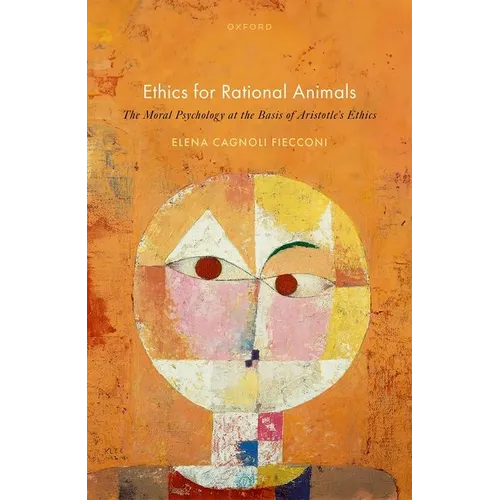
Ethics for Rational Animals brings to light a novel account of akrasia, practical wisdom, and character virtue through an original and comprehensive study of the moral psychology at the basis of Aristotle's ethics. It argues that practical wisdom is a persuasive rational excellence, that virtue is a listening excellence, and that the ignorance involved in akrasia is in fact a failure of persuasion. Aristotle's moral psychology emerges from this reconstruction as a qualified intellectualism. The view is intellectualistic because it describes practical wisdom as the sort of knowledge that can govern desire and action and akrasia as involving a form of ignorance. However, Aristotle's intellectualism is qualified because practical wisdom goes beyond grasping the truth about the human good, for it must also be able to convey the truth persuasively to non-rational cognition and desires.
Through a study of Aristotle's works on ethics, psychology, and biology, Elena Cagnoli Fiecconi shows that there are unexplored ways in which rational and non-rational cognition and desire cooperate and influence one another. These include attention, the capacity of the rational part of the soul to manipulate the non-rational part of the soul, and the capacity to exercise phantasia for speculation, creativity, and research. She argues that, despite being integrated with non-rational cognition and desire, rational cognition of value struggles to control human behaviour and motivation. More specifically, she defends the key thesis that grasping the truth about the human good is not sufficient for humans to regulate action and desire. Therefore, practical wisdom does not merely grasp the truth about the human good, but it controls action and desire because it conveys the truth effectively to the non-rational part of the soul. Conversely, akrasia does not merely involve a lack of epistemic access to the truth about the human good, but a failure to persuade the non-rational part of the soul about it. This study of practical wisdom and akrasia also sheds light on character virtue, which emerges as a practical excellence whose task is to listen to reason.Author Biography
Elena Cagnoli Fiecconi, Lecturer in Ancient Philosophy, UCL Department of Greek and Latin
Elena Cagnoli Fiecconi is Lecturer in Ancient Philosophy at UCL Greek and Latin. She completed her doctoral studies at the University of Oxford and two postdocs at Thumos in Geneva and at the Polonsky Academy in Jerusalem. She works especially on Aristotle's ethics and philosophy of mind, but she has broad interests in ancient and contemporary philosophy.


