Skip to content
Welcome To Our Store.
100,000+ Products for Home, Medical, Office & Classroom Needs
Search
Skip to product information
1 of 1

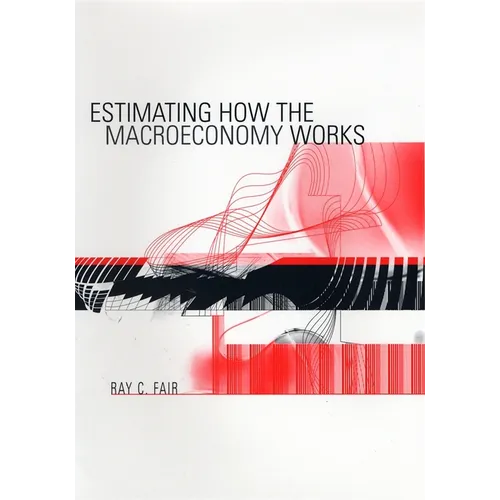
Estimating How the Macroeconomy Works - Hardcover

$180.00 USD
$180.00 USD
Sale Sold out
Shipping calculated at checkout.
In stock (100 units), ready to be shipped

Available Offers

Fastest Delivery Tomorrow With Vip DealOrder within 1 hr 8 mins.

Instant 10% Discount On HDFC Banks Credit/Debit Cards EMI and CreditCard

Secure checkout with
  • American Express
  • Apple Pay
  • Diners Club
  • Discover
  • Google Pay
  • Mastercard
  • PayPal
  • Shop Pay
  • Visa
  • Daily deals
  • Return policy
  • Payment method
  • Help center 24/7

Flight Range: Up to 1,000 meters (3,280 feet)

Maximum Speed: 45 kilometers per hour (28 miles per hour)

For all orders exceeding a value of 100USD shipping is offered for free.

Returns will be accepted for up to 10 days of Customer’s receipt or tracking number on unworn items. You, as a Customer, are obliged to inform us via email before you return the item.

Otherwise, standard shipping charges apply. Check out our delivery Terms & Conditions for more details.

View Product Details
Shopping cart
Product Product subtotal Quantity Price Product subtotal
Estimating How the Macroeconomy Works - Hardcover
$180.00/ea
$0.00
$180.00/ea $0.00

Product Description

by Ray C. Fair (Author)

Macroeconomics tries to describe and explain the economywide movement of prices, output, and unemployment. The field has been sharply divided among various schools, including Keynesian, monetarist, new classical, and others. It has also been split between theorists and empiricists. Ray Fair is a resolute empiricist, developing and refining methods for testing theories and models. The field cannot advance without the discipline of testing how well the models approximate the data. Using a multicountry econometric model, he examines several important questions, including what causes inflation, how monetary authorities behave and what are their stabilization limits, how large is the wealth effect on aggregate consumption, whether European monetary policy has been too restrictive, and how large are the stabilization costs to Europe of adopting the euro. He finds, among other things, little evidence for the rational expectations hypothesis and for the so-called non-accelerating inflation rate of unemployment (NAIRU) hypothesis. He also shows that the U.S. economy in the last half of the 1990s was not a "new age" economy.

Number of Pages: 314
Dimensions: 0.98 x 10.32 x 7.34 IN
Publication Date: December 15, 2004
you might like