Skip to content
Welcome To Our Store.
100,000+ Products for Home, Medical, Office & Classroom Needs
Search
Skip to product information
1 of 2

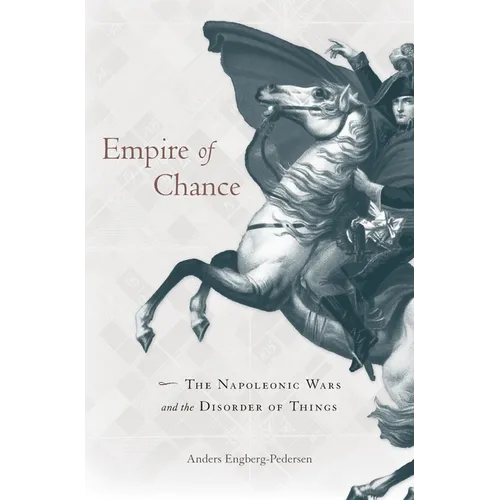
Empire of Chance: The Napoleonic Wars and the Disorder of Things - Hardcover

$99.00 USD
$99.00 USD
Sale Sold out
Shipping calculated at checkout.
In stock (100 units), ready to be shipped

Available Offers

Fast delivery available on most orders

Multiple secure payment options accepted

Secure checkout with
  • American Express
  • Apple Pay
  • Diners Club
  • Discover
  • Google Pay
  • Mastercard
  • PayPal
  • Shop Pay
  • Visa

Flight Range: Up to 1,000 meters (3,280 feet)

Maximum Speed: 45 kilometers per hour (28 miles per hour)

For all orders exceeding a value of 100USD shipping is offered for free.

Returns will be accepted for up to 10 days of Customer’s receipt or tracking number on unworn items. You, as a Customer, are obliged to inform us via email before you return the item.

Otherwise, standard shipping charges apply. Check out our delivery Terms & Conditions for more details.

View Product Details
Shopping cart
Product Product subtotal Quantity Price Product subtotal
Empire of Chance: The Napoleonic Wars and the Disorder of Things - Hardcover
$99.00/ea
$0.00
$99.00/ea $0.00

Product Description

by Anders Engberg-Pedersen (Author)

Napoleon's campaigns were the most complex military undertakings in history before the nineteenth century. But the defining battles of Austerlitz, Borodino, and Waterloo changed more than the nature of warfare. Concepts of chance, contingency, and probability became permanent fixtures in the West's understanding of how the world works. Empire of Chance examines anew the place of war in the history of Western thought, showing how the Napoleonic Wars inspired a new discourse on knowledge.

Soldiers returning from the battlefields were forced to reconsider basic questions about what it is possible to know and how decisions are made in a fog of imperfect knowledge. Artists and intellectuals came to see war as embodying modernity itself. The theory of war espoused in Carl von Clausewitz's classic treatise responded to contemporary developments in mathematics and philosophy, and the tools for solving military problems--maps, games, and simulations--became models for how to manage chance. On the other hand, the realist novels of Balzac, Stendhal, and Tolstoy questioned whether chance and contingency could ever be described or controlled.

As Anders Engberg-Pedersen makes clear, after Napoleon the state of war no longer appeared exceptional but normative. It became a prism that revealed the underlying operative logic determining the way society is ordered and unfolds.


Number of Pages: 336
Dimensions: 1.1 x 10 x 5.7 IN
Publication Date: March 10, 2015
you might like
