


Product Description
by Sabrina Toni (Author), Bruno Cassarà (Translator), Joshua Stancil (Editor)
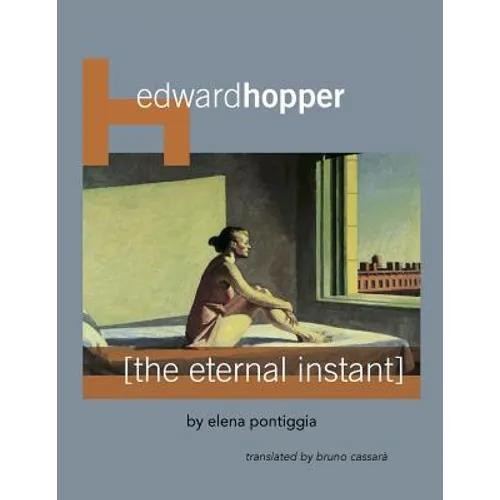
In the years of the Great Depression and the New Deal in America, the master realist painter Edward Hopper (1882 - 1967) looked at everyday life in America with disenchantment and melancholy, yet searching for the existence of a meaning in it. This artist is open to the possibility of the infinite, and he looks for its signs, not in a transcendent dimension, but in the reality that surrounds him. It is a reality that doesn't consist so much of skyscrapers and Broadway lights but rather of the limited horizon of small town America. Realism, or being faithful to the real, for Hopper does not simply mean imitating what is in front of him. Rather, realism is evident, above all, in his fidelity to what his dialectic, and at times dramatic relationship with reality stirs up in him: "My aim in painting has always been to make the most exact transcription possible of my most intimate impression of nature." When representing reality Hopper concentrates his attention particularly on light. "Maybe I am not very human - all I wanted to do was to paint the sunlight on the side of a house." Here is where he recognizes the possibility of a new, deeper look at things. His painting stops the passing of time: a house, a lighthouse, a shop, or a figure, all caught in a state of fixed suspension, and immersed in this decided, dense, almost metaphysical light. This is his newness: the possibility of the infinite entering a still, everyday, reality. Hopper himself said he loved the idea of the "delicious hour" expressed by Verlaine. In other words, the moment in which life seems to stop and suddenly the infinite is revealed in it. It is on the threshold of this newness, seen through the reality of a window or shop-front, that his figures seem to stop, astonished, as if frozen in the instant of the sigh preceding the recognition of this infinite. By focusing attention on the artist's main works, this book illustrates Hopper's poetic theory by pointing out its connections with philosophy (Emerson) and poetry (Verlaine, Goethe, Frost). In addition, there will be references to the America of the Great Depression, with parallels and examples drawn from the areas of photography and cinema of that period.