


Product Description
by Nina L. Etkin (Author)
Chile pepper is used today as a flavoring, but Aztecs also applied it for toothache, sore throat, and asthma. The tonic properties of coffee have been recorded in Islamic pharmacopoeia since the eleventh century, and many peoples have used it to protect against Parkinson's disease. Although much has been documented regarding the nutritional values of foods, until recently little attention has been paid to the pharmacologic potential of diet.
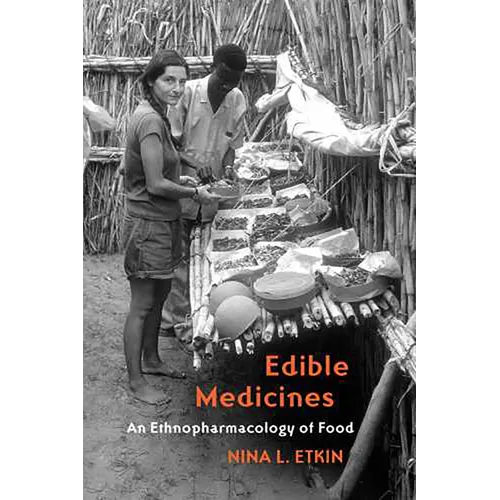
This book investigates the health implications of foods from the cuisines of peoples around the world to describe the place of food in health maintenance. In this wide-ranging book, Nina Etkin reveals the pharmacologic potential of foods in the specific cultural contexts in which they are used. Incorporating co-evolution with a biocultural perspective, she addresses some of the physiological effects of foods across cultures and through history while taking into account both the complex dynamics of food choice and the blurred distinctions between food and medicine. Showing that food choice is more closely linked to health than is commonly thought, she helps us to understand the health implications of people's food-centered actions in the context of real-life circumstances. Drawing on an extensive literature that transects food and culture, the history of medicine, ethnopharmacology, food history, nutrition, and human evolution, Edible Medicines demonstrates the intricate relationship between culture and nature. It will appeal to a wide range of scholars and professionals, from anthropologists to nutritionists, as well as general readers seeking a greater understanding of the medicinal aspects of food.Front Jacket
Chile pepper is used today as a flavoring, but Aztecs also applied it for toothache, sore throat, and asthma. The tonic properties of coffee have been recorded in Islamic pharmacopoeia since the eleventh century, and many peoples have used it to protect against Parkinsonas disease. Although much has been documented regarding the nutritional values of foods, until recently little attention has been paid to the pharmacologic potential of diet. This book investigates the health implications of foods from the cuisines of peoples around the world to describe the place of food in health maintenance. In this wide-ranging book, Nina Etkin reveals the pharmacologic potential of foods in the specific cultural contexts in which they are used. Incorporating co-evolution with a biocultural perspective, she addresses some of the physiological effects of foods across cultures and through history while taking into account both the complex dynamics of food choice and the blurred distinctions between food and medicine. Showing that food choice is more closely linked to health than is commonly thought, she helps us to understand the health implications of peopleas food-centered actions in the context of real-life circumstances. Drawing on an extensive literature that transects food and culture, the history of medicine, ethnopharmacology, food history, nutrition, and human evolution, "Edible Medicines" demonstrates the intricate relationship between culture and nature. It will appeal to a wide range of scholars and professionals, from anthropologists to nutritionists, as well as general readers seeking a greater understanding of the medicinal aspects of food.
Author Biography
Nina L. Etkin was a professor of anthropology and graduate chair in the Department of Anthropology at the University of Hawaii at Manoa until her death in 2009. She was one of the two recipients of the 2009 Distinguished Economic Botanist Award from the Society for Economic Botany, and she was awarded the prestigious Hawai'i Regents' Medal for Excellence in Research.



