Skip to content
Welcome To Our Store.
100,000+ Products for Home, Medical, Office & Classroom Needs
Search
Skip to product information
1 of 1

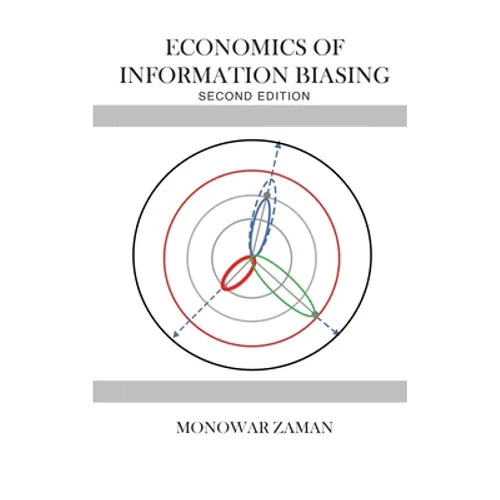
Economics of Information Biasing - Hardcover

$61.54 USD
$61.54 USD
Sale Sold out
Shipping calculated at checkout.
In stock (100 units), ready to be shipped

Available Offers

Fastest Delivery Tomorrow With Vip DealOrder within 1 hr 8 mins.

Instant 10% Discount On HDFC Banks Credit/Debit Cards EMI and CreditCard

Secure checkout with
  • American Express
  • Apple Pay
  • Diners Club
  • Discover
  • Google Pay
  • Mastercard
  • PayPal
  • Shop Pay
  • Visa
  • Daily deals
  • Return policy
  • Payment method
  • Help center 24/7

Flight Range: Up to 1,000 meters (3,280 feet)

Maximum Speed: 45 kilometers per hour (28 miles per hour)

For all orders exceeding a value of 100USD shipping is offered for free.

Returns will be accepted for up to 10 days of Customer’s receipt or tracking number on unworn items. You, as a Customer, are obliged to inform us via email before you return the item.

Otherwise, standard shipping charges apply. Check out our delivery Terms & Conditions for more details.

View Product Details
Shopping cart
Product Product subtotal Quantity Price Product subtotal
Economics of Information Biasing - Hardcover
$61.54/ea
$0.00
$61.54/ea $0.00

Product Description

by Monowar Zaman (Author)

This book describes a new scientific paradigm of economics that unifies the diverse thoughts of economics to provide a simplified but holistic view of real-world economic and

social structures. It goes deep into very fundamental dynamics of rational behavior of economic agents with respect to information sharing amid their diverse self-interests. In

a real-world economy, the probability of achieving Pareto efficiency for a subset of the population is much higher than for the whole population. This model is enhanced to

describe that our market is not uniform but distributed in layers of energy states. Our social and economic institutions can be subjectively modeled as an information biasing

chain where economic agents are positioned in different abstract coalitions according to the interdependence of their payoff functions. The upper layer coalitions virtually

control the institutions for dominance, and they have greater influences on our markets that provoke growth by exhausting energy and other natural resources.


This book contains over 100 illustrations.

Number of Pages: 532
Dimensions: 1.13 x 9 x 6 IN
Publication Date: December 07, 2021
you might like