Skip to content
Welcome To Our Store.
100,000+ Products for Home, Medical, Office & Classroom Needs
Search
Skip to product information
1 of 2

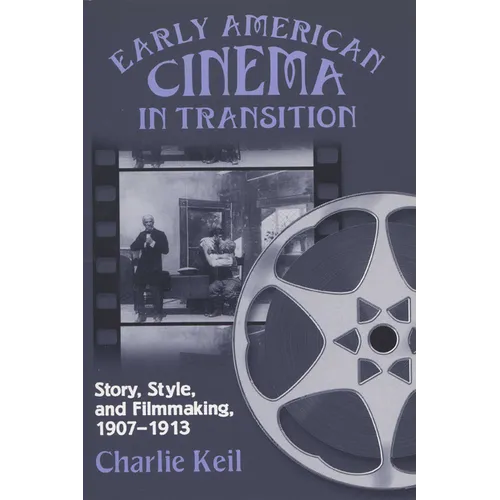
Early American Cinema in Transition: Story, Style, and Filmmaking, 1907a 1913 - Paperback

$35.93 USD
$35.93 USD
Sale Sold out
Shipping calculated at checkout.
In stock (100 units), ready to be shipped

Available Offers

Fast delivery available on most orders

Multiple secure payment options accepted

Secure checkout with
  • American Express
  • Apple Pay
  • Diners Club
  • Discover
  • Google Pay
  • Mastercard
  • PayPal
  • Shop Pay
  • Visa

Flight Range: Up to 1,000 meters (3,280 feet)

Maximum Speed: 45 kilometers per hour (28 miles per hour)

For all orders exceeding a value of 100USD shipping is offered for free.

Returns will be accepted for up to 10 days of Customer’s receipt or tracking number on unworn items. You, as a Customer, are obliged to inform us via email before you return the item.

Otherwise, standard shipping charges apply. Check out our delivery Terms & Conditions for more details.

View Product Details
Shopping cart
Product Product subtotal Quantity Price Product subtotal
Early American Cinema in Transition: Story, Style, and Filmmaking, 1907a 1913 - Paperback
$35.93/ea
$0.00
$35.93/ea $0.00

Product Description

by Charlie Keil (Author)

The period 1907-1913 marks a crucial transitional moment in American cinema. As moving picture shows changed from mere novelty to an increasingly popular entertainment, fledgling studios responded with longer running times and more complex storytelling. A growing trade press and changing production procedures also influenced filmmaking. In Early American Cinema in Transition, Charlie Keil looks at a broad cross-section of fiction films to examine the formal changes in cinema of this period and the ways that filmmakers developed narrative techniques to suit the fifteen-minute, one-reel format.
Keil outlines the kinds of narratives that proved most suitable for a single reel's duration, the particular demands that time and space exerted on this early form of film narration, and the ways filmmakers employed the unique features of a primarily visual medium to craft stories that would appeal to an audience numbering in the millions. He underscores his analysis with a detailed look at six films: The Boy Detective; The Forgotten Watch; Rose O'Salem-Town; Cupid's Monkey Wrench; Belle Boyd, A Confederate Spy; and Suspense.


Number of Pages: 320
Dimensions: 0.72 x 9 x 6.1 IN
Publication Date: February 15, 1989
you might like
