


Product Description
by Enrique Desmond Arias (Author)
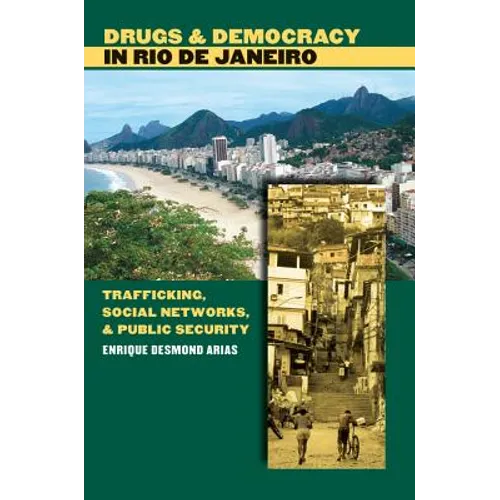
Taking an ethnographic approach to understanding urban violence, Enrique Desmond Arias examines the ongoing problems of crime and police corruption that have led to widespread misery and human rights violations in many of Latin America's new democracies. Employing participant observation and interview research in three favelas (shantytowns) in Rio de Janeiro over a nine-year period, Arias closely considers the social interactions and criminal networks that are at the heart of the challenges to democratic governance in urban Brazil.
Much of the violence is the result of highly organized, politically connected drug dealers feeding off of the global cocaine market. Rising crime prompts repressive police tactics, and corruption runs deep in state structures. The rich move to walled communities, and the poor are caught between the criminals and often corrupt officials. Arias argues that public policy change is not enough to stop the vicious cycle of crime and corruption. The challenge, he suggests, is to build new social networks committed to controlling violence locally. Arias also offers comparative insights that apply this analysis to other cities in Brazil and throughout Latin America.
Front Jacket
Based on ethnographic work in three favelas (shantytowns) over the past ten years, this analysis considers the harmful effects of illegal drug trafficking and associated violence on crime control, governance, and, ultimately, democratization in Brazil. Much of the violence is the result of highly organized, politically connected drug dealers, feeding off of the global cocaine market. Rising crime prompts repressive police tactics, corruption runs deep in state structures, the rich move to walled communities and the poor are caught between criminals and corrupt officials. Arias argues that institutional public policy is not enough to change the circumstances--the challenge is to build new social networks committed to controlling violence locally. He suggests this method could apply to cities elsewhere in Brazil and throughout the rest of Latin America.



