


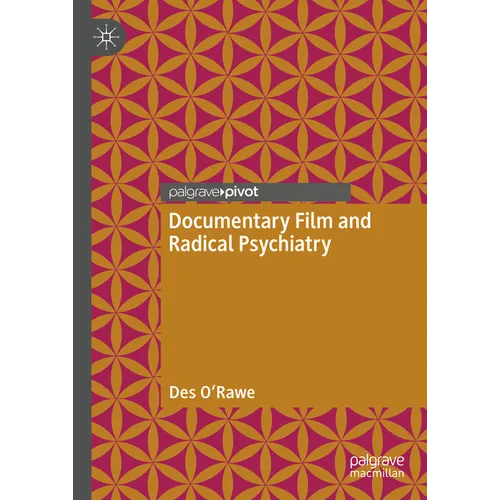
Product Description
by Des O'Rawe (Author)
This book examines how documentary film responded to the methods and controversies associated with radical psychiatry, especially during the long 1960s. Broad in scope and comparative in approach, it discusses a range of films in terms of how their production histories and visual styles were influenced by wider cultural, technological, and autobiographical factors. The book argues that documentary filmmaking offers both an important critical perspective on psychiatric treatments, institutions, and attitudes, as well as contributing to a critique of how normative modes of being are constructed across mainstream media and popular culture. In their negotiations with the politics of psychiatry, such films will often question the ethnographic and observational integrity of the documentary or "non-fiction" form itself, especially when it adopts diaristic, interactive, socially engaged and advocatory strategies to represent mental illness and healthcare provision. The relationship between documentary film and the constellation of insights, arguments, communities, and individuals associated with the moment of radical psychiatry remains a complex but indispensable legacy of the post-war era.
Back Jacket
This book examines how documentary film responded to the methods and controversies associated with radical psychiatry, especially during the long 1960s. Broad in scope and comparative in approach, it discusses a range of films in terms of how their production histories and visual styles were influenced by wider cultural, technological, and autobiographical factors. The book argues that documentary filmmaking offers both an important critical perspective on psychiatric treatments, institutions, and attitudes, as well as contributing to a critique of how normative modes of being are constructed across mainstream media and popular culture. In their negotiations with the politics of psychiatry, such films will often question the ethnographic and observational integrity of the documentary or "non-fiction" form itself, especially when it adopts diaristic, interactive, socially engaged and advocatory strategies to represent mental illness and healthcare provision. The relationship between documentary film and the constellation of insights, arguments, communities, and individuals associated with the moment of radical psychiatry remains a complex but indispensable legacy of the post-war era.
Des O'Rawe is a senior lecturer in Film Studies at Queen's University Belfast, where he is also director of the Centre for Documentary Research and a research fellow at the Senator George J. Mitchell Institute for Global Peace, Security and Justice. His research focuses chiefly on comparative and interdisciplinary approaches to the study of film and screen media, and his publications include: Regarding the Real: Cinema, Documentary, and the Visual Arts (MUP, 2016) and Post-Conflict Performance, Film, and Visual Arts: Cities of Memory (with Mark Phelan; Palgrave, 2016).
Author Biography
Des O'Rawe is a senior lecturer in Film Studies at Queen's University Belfast, where he is also director of the Centre for Documentary Research and a research fellow at the Senator George J. Mitchell Institute for Global Peace, Security and Justice. His research focuses chiefly on comparative and interdisciplinary approaches to the study of film and screen media, and his publications include: Regarding the Real: Cinema, Documentary, and the Visual Arts (MUP, 2016) and Post-Conflict Performance, Film, and Visual Arts: Cities of Memory (with Mark Phelan; Palgrave, 2016).