Skip to content
Welcome To Our Store.
100,000+ Products for Home, Medical, Office & Classroom Needs
Search
Skip to product information
1 of 2

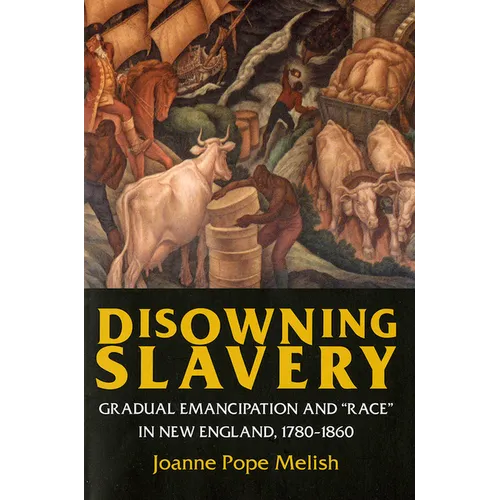
Disowning Slavery: Gradual Emancipation and Race in New England, 1780-1860 - Paperback

$66.51 USD
$66.51 USD
Sale Sold out
Shipping calculated at checkout.
In stock (100 units), ready to be shipped

Available Offers

Fast delivery available on most orders

Multiple secure payment options accepted

Secure checkout with
  • American Express
  • Apple Pay
  • Diners Club
  • Discover
  • Google Pay
  • Mastercard
  • PayPal
  • Shop Pay
  • Visa

Flight Range: Up to 1,000 meters (3,280 feet)

Maximum Speed: 45 kilometers per hour (28 miles per hour)

For all orders exceeding a value of 100USD shipping is offered for free.

Returns will be accepted for up to 10 days of Customer’s receipt or tracking number on unworn items. You, as a Customer, are obliged to inform us via email before you return the item.

Otherwise, standard shipping charges apply. Check out our delivery Terms & Conditions for more details.

View Product Details
Shopping cart
Product Product subtotal Quantity Price Product subtotal
Disowning Slavery: Gradual Emancipation and Race in New England, 1780-1860 - Paperback
$66.51/ea
$0.00
$66.51/ea $0.00

Product Description

by Joanne Pope Melish (Author)

Following the abolition of slavery in New England, white citizens seemed to forget that it had ever existed there. Drawing on a wide array of primary sources--from slaveowners' diaries to children's daybooks to racist broadsides--Joanne Pope Melish reveals not only how northern society changed but how its perceptions changed as well.

Melish explores the origins of racial thinking and practices to show how ill-prepared the region was to accept a population of free people of color in its midst. Because emancipation was gradual, whites transferred prejudices shaped by slavery to their relations with free people of color, and their attitudes were buttressed by abolitionist rhetoric which seemed to promise riddance of slaves as much as slavery. She tells how whites came to blame the impoverished condition of people of color on their innate inferiority, how racialization became an important component of New England ante-bellum nationalism, and how former slaves actively participated in this discourse by emphasizing their African identity.

Placing race at the center of New England history, Melish contends that slavery was important not only as a labor system but also as an institutionalized set of relations. The collective amnesia about local slavery's existence became a significant component of New England regional identity.

Author Biography

Joanne Pope Melish is Associate Professor of History at the University of Kentucky.

Number of Pages: 320
Dimensions: 0.9 x 9.1 x 6.1 IN
Publication Date: November 30, 2000
you might like

