


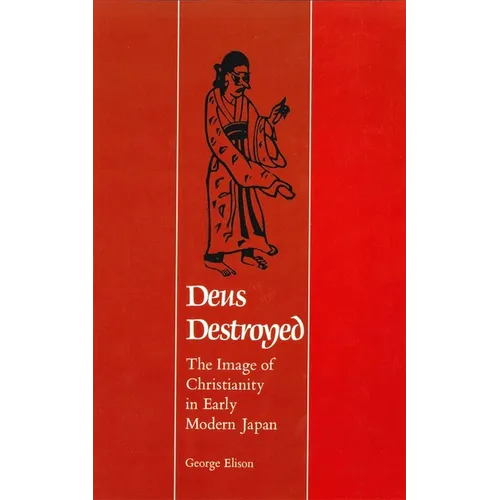
Product Description
by George Elison (Author)
Japan's "Christian Century" began in 1549 with the arrival of Jesuit missionaries led by Saint Francis Xavier, and ended in 1639 when the Tokugawa regime issued the final Sakoku Edict prohibiting all traffic with Catholic lands. "Sakoku"--national isolation--would for more than two centuries be the sum total of the regime's approach to foreign affairs. This policy was accompanied by the persecution of Christians inside Japan, a course of action for which the missionaries and their zealots were in part responsible because of their dogmatic orthodoxy. The Christians insisted that "Deus" was owed supreme loyalty, while the Tokugawa critics insisted on the prior importance of performing one's role within the secular order, and denounced the subversive doctrine whose First Commandment seemed to permit rebellion against the state.
In discussing the collision of ideas and historical processes, George Elison explores the attitudes and procedures of the missionaries, describes the entanglements in politics that contributed heavily to their doom, and shows the many levels of the Japanese response to Christianity. Central to his book are translations of four seventeenth-century, anti-Christian polemical tracts.Back Jacket
'George Elison's exuberant style, his amazing polyglot skills, and his overwhelming erudition make for fascinating reading. I believe this work will be accepted as a major contribution not just to this phase of history in Japan and the history o the Christian church but also other broader and very up-to-date problems of the meeting of cultures.'



