Skip to content
Welcome To Our Store.
100,000+ Products for Home, Medical, Office & Classroom Needs
Search
Skip to product information
1 of 1

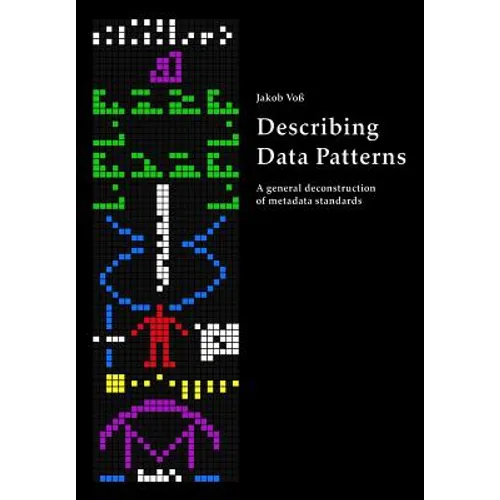
Describing Data Patterns: A general deconstruction of metadata standards - Paperback

$17.28 USD
$17.28 USD
Sale Sold out
Shipping calculated at checkout.
In stock (100 units), ready to be shipped

Available Offers

Fastest Delivery Tomorrow With Vip DealOrder within 1 hr 8 mins.

Instant 10% Discount On HDFC Banks Credit/Debit Cards EMI and CreditCard

Secure checkout with
  • American Express
  • Apple Pay
  • Diners Club
  • Discover
  • Google Pay
  • Mastercard
  • PayPal
  • Shop Pay
  • Visa

Flight Range: Up to 1,000 meters (3,280 feet)

Maximum Speed: 45 kilometers per hour (28 miles per hour)

For all orders exceeding a value of 100USD shipping is offered for free.

Returns will be accepted for up to 10 days of Customer’s receipt or tracking number on unworn items. You, as a Customer, are obliged to inform us via email before you return the item.

Otherwise, standard shipping charges apply. Check out our delivery Terms & Conditions for more details.

View Product Details
Shopping cart
Product Product subtotal Quantity Price Product subtotal
Describing Data Patterns: A general deconstruction of metadata standards - Paperback
$17.28/ea
$0.00
$17.28/ea $0.00

Product Description

by Jakob Voss (Author)

This book analyzes the methods, technologies, standards, and languages to structure and describe data in their entirety. It reveals common features, hidden assumptions, and ubiquitous patterns among these methods and shows how data are actually structured and described independently from particular trends and technologies.

Examples of data structuring methods analyzed critically include:

  • Encodings (e.g. Unicode)
  • Identifiers and Identifier systems (e.g. ISBN)
  • File systems
  • Database Systems (record databases, relational databases, NoSQL...)
  • Data structuring languages (JSON, XML, CSV, RDF...)
  • markup languages (SGML, HTML, TEI, Markdown...)
  • Schema languages (BNF, XSD, RDFS, OWL, SQL...)
  • Conceptual modeling languages (ERM, ORM, UML, DSL...)
  • Conceptual diagrams

It is shown how particular method of data structuring and description can best be categorized by their primary purpose. The study further exposes five basic paradigms that deeply shape how data is structured and described in practice. The third results is a pattern language of data structuring. Patterns show problems and solutions which occur over and over again in data. Each pattern is described with its benefits, consequences, pitfalls, and relations to other patterns.

The results can help to better understand data and its actual forms, both for consumption and creation of data. Possible applications include data analysis, data modeling, data archaeology, and data literacy.

Number of Pages: 286
Dimensions: 0.6 x 9.61 x 6.69 IN
Publication Date: August 06, 2013
you might like