


Product Description
by Daniel Michael Mullin (Author)
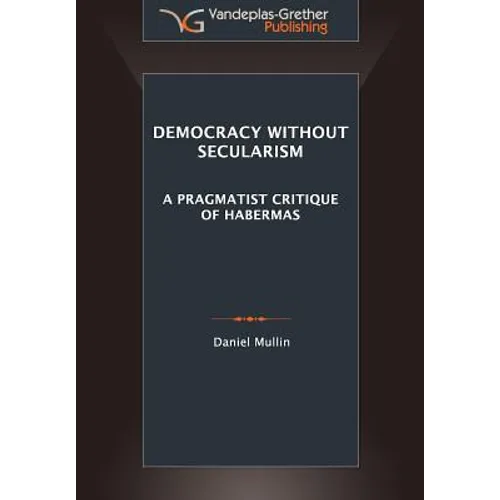
Jurgen Habermas has argued that democracy depends on all citizens recognizing the legitimacy of the law. Therefore, political argument must appeal only to public reason which is secular. Religious citizens must translate their reasons into a secular language accessible to the public. This dissertation argues that religious arguments are justified in public discourse if they refrain from dogmatism. Moreover, there is nothing inherent in secular reasons that make them publicly accessible or likely to generate consensus among members of a pluralistic society. If we treat religious arguments as simply arguments with controversial premises, it becomes less clear why religious arguments are singled out as particularly problematic for liberal democracies, since many secular political arguments share this feature. Granted, religious reasons are unlikely to secure consensus, but this does not count against them if consensus is not the goal of democratic discourse. This dissertation makes the case that Habermas, and other liberal theorists such as Rawls, have placed too much emphasis on consensus as the goal of democracy. Moreover, what they refer to is not practical consensus achieved pragmatically through compromise, but an idealized consensus that is the achievement of secular reason. This is problematic for two main reasons: there is no normative reason to think we ought to attain such consensus and such consensus is unlikely to be achieved in practice. Thus, there seems to be no normative force to the claim that religious citizens ought to translate their arguments into secular language."



