Skip to content
Welcome To Our Store.
100,000+ Products for Home, Medical, Office & Classroom Needs
Search
Skip to product information
1 of 1

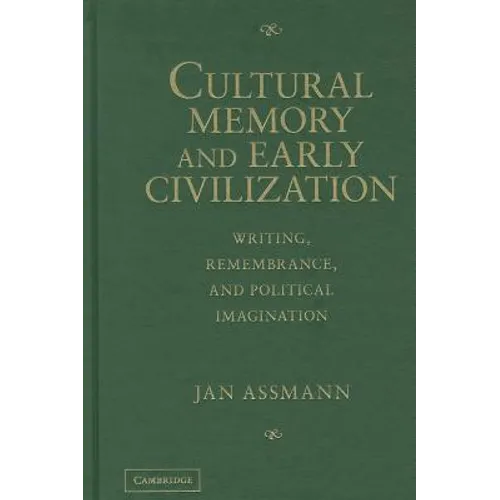
Cultural Memory and Early Civilization - Hardcover

$188.19 USD
$188.19 USD
Sale Sold out
Shipping calculated at checkout.
In stock (100 units), ready to be shipped

Available Offers

Fast delivery available on most orders

Multiple secure payment options accepted

Secure checkout with
  • American Express
  • Apple Pay
  • Diners Club
  • Discover
  • Google Pay
  • Mastercard
  • PayPal
  • Shop Pay
  • Visa

Flight Range: Up to 1,000 meters (3,280 feet)

Maximum Speed: 45 kilometers per hour (28 miles per hour)

For all orders exceeding a value of 100USD shipping is offered for free.

Returns will be accepted for up to 10 days of Customer’s receipt or tracking number on unworn items. You, as a Customer, are obliged to inform us via email before you return the item.

Otherwise, standard shipping charges apply. Check out our delivery Terms & Conditions for more details.

View Product Details
Shopping cart
Product Product subtotal Quantity Price Product subtotal
Cultural Memory and Early Civilization - Hardcover
$188.19/ea
$0.00
$188.19/ea $0.00

Product Description

by Jan Assmann (Author)

Now available to an English-speaking audience, this book presents a groundbreaking theoretical analysis of memory, identity, and culture. It investigates how cultures remember, arguing that human memory exists and is communicated in two ways, namely inter-human interaction and in external systems of notation, such as writing, which can span generations. Dr. Assmann defines two theoretical concepts of cultural memory, differentiating between the long-term memory of societies, which can span up to 3,000 years, and communicative memory, which is typically restricted to 80-100 years. He applies this theoretical framework to case studies of four specific cultures, illustrating the function contexts and specific achievements, including the state, international law, religion, and science. Ultimately, his research demonstrates that memory is not simply a means of retaining information, but rather a force that can shape cultural identity and allow cultures to respond creatively to both daily challenges and catastrophic changes.

Number of Pages: 296
Dimensions: 0.9 x 9.1 x 6.1 IN
Publication Date: December 05, 2011
you might like