Skip to content
Welcome To Our Store.
100,000+ Products for Home, Medical, Office & Classroom Needs
Search
Skip to product information
1 of 1

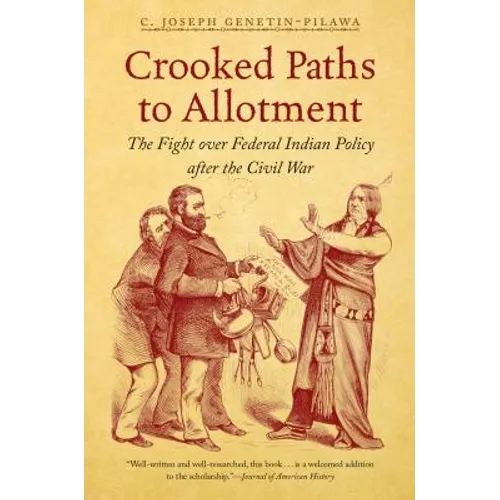
Crooked Paths to Allotment: The Fight over Federal Indian Policy after the Civil War - Paperback

$56.63 USD
$56.63 USD
Sale Sold out
Shipping calculated at checkout.
In stock (100 units), ready to be shipped

Available Offers

Fastest Delivery Tomorrow With Vip DealOrder within 1 hr 8 mins.

Instant 10% Discount On HDFC Banks Credit/Debit Cards EMI and CreditCard

Secure checkout with
  • American Express
  • Apple Pay
  • Diners Club
  • Discover
  • Google Pay
  • Mastercard
  • PayPal
  • Shop Pay
  • Visa

Flight Range: Up to 1,000 meters (3,280 feet)

Maximum Speed: 45 kilometers per hour (28 miles per hour)

For all orders exceeding a value of 100USD shipping is offered for free.

Returns will be accepted for up to 10 days of Customer’s receipt or tracking number on unworn items. You, as a Customer, are obliged to inform us via email before you return the item.

Otherwise, standard shipping charges apply. Check out our delivery Terms & Conditions for more details.

View Product Details
Shopping cart
Product Product subtotal Quantity Price Product subtotal
Crooked Paths to Allotment: The Fight over Federal Indian Policy after the Civil War - Paperback
$56.63/ea
$0.00
$56.63/ea $0.00

Product Description

by C. Joseph Genetin-Pilawa (Author)

Standard narratives of Native American history view the nineteenth century in terms of steadily declining Indigenous sovereignty, from removal of southeastern tribes to the 1887 General Allotment Act. In Crooked Paths to Allotment, C. Joseph Genetin-Pilawa complicates these narratives, focusing on political moments when viable alternatives to federal assimilation policies arose. In these moments, Native American reformers and their white allies challenged coercive practices and offered visions for policies that might have allowed Indigenous nations to adapt at their own pace and on their own terms. Examining the contests over Indian policy from Reconstruction through the Gilded Age, Genetin-Pilawa reveals the contingent state of American settler colonialism.
Genetin-Pilawa focuses on reformers and activists, including Tonawanda Seneca Ely S. Parker and Council Fire editor Thomas A. Bland, whose contributions to Indian policy debates have heretofore been underappreciated. He reveals how these men and their allies opposed such policies as forced land allotment, the elimination of traditional cultural practices, mandatory boarding school education for Indian youth, and compulsory participation in the market economy. Although the mainstream supporters of assimilation successfully repressed these efforts, the ideas and policy frameworks they espoused established a tradition of dissent against disruptive colonial governance.


Number of Pages: 248
Dimensions: 0.67 x 9.39 x 6.11 IN
Illustrated: Yes
Publication Date: August 01, 2014
you might like
