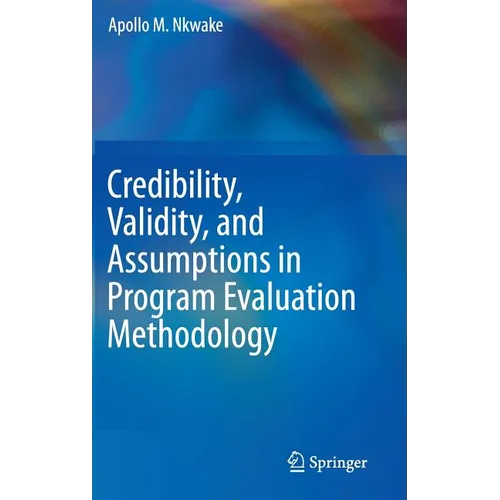
Product Description
by Apollo M. Nkwake (Author)
This book focuses on assumptions underlying methods choice in program evaluation. Credible program evaluation extends beyond the accuracy of research designs to include arguments justifying the appropriateness of methods. An important part of this justification is explaining the assumptions made about the validity of methods. This book provides a framework for understanding methodological assumptions, identifying the decisions made at each stage of the evaluation process, the major forms of validity affected by those decisions, and the preconditions for and assumptions about those validities.
Though the selection of appropriate research methodology is not a new topic within social development research, previous publications suggest only advantages and disadvantages of using various methods and when to use them. This book goes beyond other publications to analyze the assumptions underlying actual methodological choices in evaluation studies and how these eventually influence evaluation quality. The analysis offered is supported by a collation of assumptions collected from a case study of 34 evaluations. Due to its in-depth analysis, strong theoretical basis, and practice examples, Credibility, Validity and Assumptions is a must-have resource for researchers, students, university professors and practitioners in program evaluation. Importantly, it provides tools for the application of appropriate research methods in program evaluation
Back Jacket
This book focuses on assumptions underlying methods choice in program evaluation. Credible program evaluation extends beyond the accuracy of research designs to include arguments justifying the appropriateness of methods. An important part of this justification is explaining the assumptions made about the validity of methods. This book provides a framework for understanding methodological assumptions, identifying the decisions made at each stage of the evaluation process, the major forms of validity affected by those decisions, and the preconditions for and assumptions about those validities.
Though the selection of appropriate research methodology is not a new topic within social development research, previous publications suggest only advantages and disadvantages of using various methods and when to use them. This book goes beyond other publications to analyze the assumptions underlying actual methodological choices in evaluation studies and how these eventually influence evaluation quality. The analysis offered is supported by a collation of assumptions collected from a case study of 34 evaluations. Due to its in-depth analysis, strong theoretical basis, and practice examples, Credibility, Validity and Assumptions in Program Evaluation Methodology, is a must-have resource for researchers, students, university professors, and practitioners in program evaluation. Importantly, it provides tools for the application of appropriate research methods in program evaluation.
Author Biography
Apollo M. Nkwake is a Research Associate Professor for Monitoring and Evaluation (M&E) at Tulane University's Disaster Resilience and Leadership Academy (DRLA). He previously held Senior M&E Advisor positions at World Vision United States, University Research Co, LLC, and JSI Research and Training Institute. He has research, monitoring and evaluation field experience with United States Agency for International Development (USAID), Bill and Melinda Gates Foundation, World Bank, the British Department for International Development (DFID), UNICEF and World Vision programs in Africa, Asia and Latin America. Apollo is an active member of American Evaluation Association, International Development Evaluation Association, and Canadian Evaluation Society; holds Canadian Evaluation Society's Credentialed Evaluator Designation and is author of two books and several peer-reviewed journal articles/book chapters on international development and program evaluation themes. Dr. Nkwake earned his PhD in Social Development from University of Cape Town.