Skip to content
Welcome To Our Store.
100,000+ Products for Home, Medical, Office & Classroom Needs
Search
Skip to product information
1 of 1

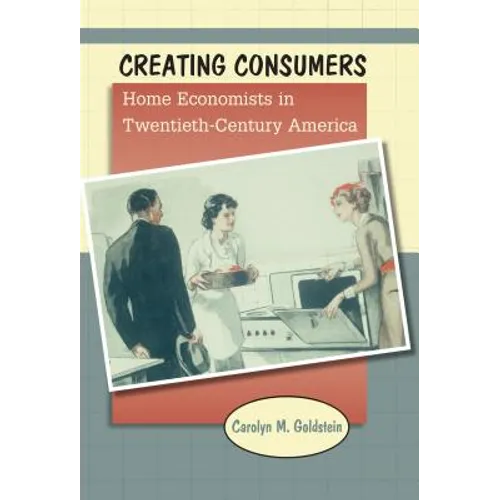
Creating Consumers: Home Economists in Twentieth-Century America - Paperback

$76.95 USD
$76.95 USD
Sale Sold out
Shipping calculated at checkout.
In stock (100 units), ready to be shipped

Available Offers

Fastest Delivery Tomorrow With Vip DealOrder within 1 hr 8 mins.

Instant 10% Discount On HDFC Banks Credit/Debit Cards EMI and CreditCard

Secure checkout with
  • American Express
  • Apple Pay
  • Diners Club
  • Discover
  • Google Pay
  • Mastercard
  • PayPal
  • Shop Pay
  • Visa

Flight Range: Up to 1,000 meters (3,280 feet)

Maximum Speed: 45 kilometers per hour (28 miles per hour)

For all orders exceeding a value of 100USD shipping is offered for free.

Returns will be accepted for up to 10 days of Customer’s receipt or tracking number on unworn items. You, as a Customer, are obliged to inform us via email before you return the item.

Otherwise, standard shipping charges apply. Check out our delivery Terms & Conditions for more details.

View Product Details
Shopping cart
Product Product subtotal Quantity Price Product subtotal
Creating Consumers: Home Economists in Twentieth-Century America - Paperback
$76.95/ea
$0.00
$76.95/ea $0.00

Product Description

by Carolyn M. Goldstein (Author)

Home economics emerged at the turn of the twentieth century as a movement to train women to be more efficient household managers. At the same moment, American families began to consume many more goods and services than they produced. To guide women in this transition, professional home economists had two major goals: to teach women to assume their new roles as modern consumers and to communicate homemakers' needs to manufacturers and political leaders. Carolyn M. Goldstein charts the development of the profession from its origins as an educational movement to its identity as a source of consumer expertise in the interwar period to its virtual disappearance by the 1970s.
Working for both business and government, home economists walked a fine line between educating and representing consumers while they shaped cultural expectations about consumer goods as well as the goods themselves. Goldstein looks beyond 1970s feminist scholarship that dismissed home economics for its emphasis on domesticity to reveal the movement's complexities, including the extent of its public impact and debates about home economists' relationship to the commercial marketplace.


Number of Pages: 424
Dimensions: 0.95 x 9.21 x 6.14 IN
Illustrated: Yes
Publication Date: December 01, 2014
you might like
