Product Description
by James Taylor (Author)
The growth of joint-stock business in Victorian Britain re-evaluated, showing in particular the resistance to it.
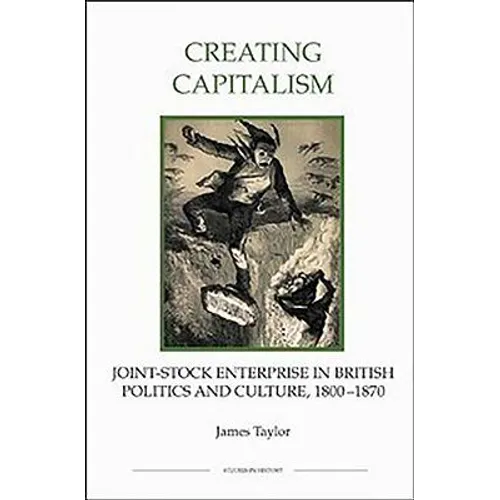
Winner of the Economic History Society's Best First Monograph award 2009 The emergence of the joint-stock company in nineteenth-century Britain was a culture shock for many Victorians. Though the home of the industrialrevolution, the nation's economy was dominated by the private partnership, seen as the most efficient as well as the most ethical form of business organisation. The large, impersonal company and the rampant speculation it was thought to encourage were viewed with suspicion and downright hostility.This book argues that the existing historiography understates society's resistance to joint-stock enterprise; it employs an eclectic range of sources, fromnewspapers and parliamentary papers to cartoons, novels and plays, to unearth this forgotten economic debate. It explores how the legal system was gradually restructured to facilitate joint-stock enterprise, a process culminatingin the limited liability legislation of the mid-1850s. This has typically been interpreted as evidence for the emergence of new, positive attitudes to speculation and economic growth, but the book demonstrates how traditional outlooks continued to influence legislation, and the way in which economic reforms were driven by political agendas. It shows how debates on the economic culture of nineteenth-century Britain are strikingly relevant to current questions over the ethics of multinational corporations. James Taylor is Senior Lecturer in British History at Lancaster University.
Number of Pages: 272
Dimensions: 0.56 x 9.21 x 6.14 IN
Publication Date: May 15, 2014