


Product Description
by Jeffrey W. Legro (Author)
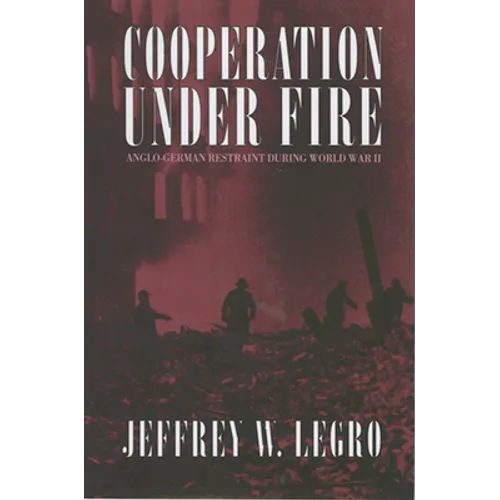
Why do nations cooperate even as they try to destroy each other? Jeffrey Legro explores this question in the context of World War II, the "total" war that in fact wasn't. During the war, combatant states attempted to sustain agreements limiting the use of three forms of combat considered barbarous--submarine attacks against civilian ships, strategic bombing of civilian targets, and chemical warfare. Looking at how these restraints worked or failed to work between such fierce enemies as Hitler's Third Reich and Churchill's Britain, Legro offers a new understanding of the dynamics of World War II and the sources of international cooperation.While traditional explanations of cooperation focus on the relations between actors, Cooperation under Fire examines what warring nations seek and why they seek it--the "preference formation" that undergirds international interaction. Scholars and statesmen debate whether it is the balance of power or the influence of international norms that most directly shapes foreign policy goals. Critically assessing both explanations, Legro argues that it was, rather, the organizational cultures of military bureaucracies--their beliefs and customs in waging war--that decided national priorities for limiting the use of force in World War II.Drawing on documents from Germany, Britain, the United States, and the former Soviet Union, Legro provides a compelling account of how military cultures molded state preferences and affected the success of cooperation. In its clear and cogent analysis, this book has significant implications for the theory and practice of international relations.
Author Biography
Jeffrey W. Legro is Randolph P. Compton Professor in the Department of Politics at the University of Virginia. He is the author of Rethinking the World: Great Power Strategies and International Order and coeditor of In Uncertain Times: American Foreign Policy after the Berlin Wall and 9/11, both from Cornell.