Skip to content
Save 5% on your next order with code PREMIUM5!
100,000+ Products for Home, Medical, Office & Classroom Needs
Search
Skip to product information
1 of 1

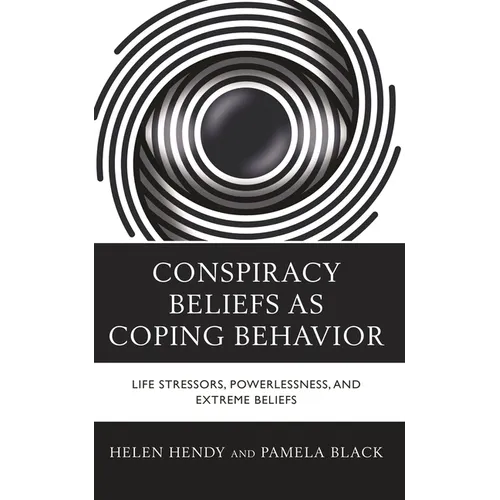
Conspiracy Beliefs as Coping Behavior: Life Stressors, Powerlessness, and Extreme Beliefs - Hardcover

$198.00 USD
$198.00 USD
Sale Sold out
Shipping calculated at checkout.
In stock (100 units), ready to be shipped

Available Offers

Fast delivery available on most orders

Multiple secure payment options accepted

Secure checkout with
  • American Express
  • Apple Pay
  • Diners Club
  • Discover
  • Google Pay
  • Mastercard
  • PayPal
  • Shop Pay
  • Visa

Flight Range: Up to 1,000 meters (3,280 feet)

Maximum Speed: 45 kilometers per hour (28 miles per hour)

For all orders exceeding a value of 100USD shipping is offered for free.

Returns will be accepted for up to 10 days of Customer’s receipt or tracking number on unworn items. You, as a Customer, are obliged to inform us via email before you return the item.

Otherwise, standard shipping charges apply. Check out our delivery Terms & Conditions for more details.

View Product Details
Shopping cart
Product Product subtotal Quantity Price Product subtotal
Conspiracy Beliefs as Coping Behavior: Life Stressors, Powerlessness, and Extreme Beliefs - Hardcover
$198.00/ea
$0.00
$198.00/ea $0.00

Product Description

by Helen M. Hendy (Author), Pamela Black (Author)

This book provides new answers to who and psychologically why individuals sometimes adopt conspiracy beliefs and thoughts of violence. Five conspiracy beliefs are considered: Government Malfeasance, Malevolent World Power, Extra-terrestrial Cover-up, Personal Well-being Threat, and Control of Information. Using a survey of 977 US citizens, the book compares thirteen possible demographic characteristics (who?) to see which ones are most associated with extreme beliefs. The book then evaluates a three-step psychological sequence (why?) in which individuals experiencing intense life stressors (health, money, or loneliness), combined with powerlessness (displayed as PTSD symptoms), have increased risk for extreme beliefs, perhaps because they offer a sense of understanding, strength, and community.

Author Biography

Helen M. Hendy is professor emeritus of psychology at Penn State Schuylkill.

Pamela Black is professor of criminal justice at Penn State Hazelton and the Discipline Coordinator for Social Sciences and Education in the University College.


Number of Pages: 190
Dimensions: 0.56 x 9 x 6 IN
Illustrated: Yes
Publication Date: November 15, 2022
you might like